I slept reasonably well last night, so as usual I woke up with my brain fully engaged in thoughts, wonderings, musings, etc. I reflected particularly on a conversation I had with one of the PAs on my care team (yeah, it’s a full team, quite a few people now) about faith. It began as mostly an intellectual discussion between two liberal arts type people (she wa a philosophy major) and ended only when the next patient arrived.
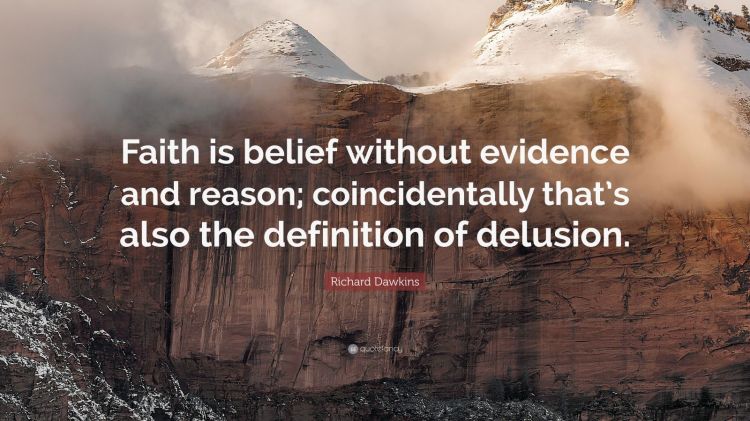
We got into an intense discussion about the definition of faith, at least one’s personal faith. I offered several personal examples and experiences that I believed demonstrated faith, as did she. We batted that around for a bit, and she would come back each time with the question, “What does that have to do with faith?” I suppose that is a very good question for me, particularly in these times when bedrock institutions and historical accounts seem to fail.
I suppose, for me, what anything has to do with faith is answered by my definition of faith. We speak of faith “in” something – I have faith in the Constitution, I have faith in democracy, I have faith in medical science. When I take a deeper look at such things, however, I think what I’m saying is that I have “belief” in those things, that I accept their reality. I believe the Constitution is a real physical document authored by those we consider Founding Fathers, I believe that democracy is a logically and morally oriented system of governance, I believe that my heart is located on the top pleft side of my body, and that when my body dies it stops beating. I belileve those things intellectually, because I have seen what I believe is evidence of their existence. Faith, however, may be a bit deeper than existential fact.
I believe we are on a planet in a solar system that orbits a central star, in regular intervals. When morning comes,, the light returns, and I believe that is true based on my experience. But do I have faith that everything is in order way up there, that a benevolent force will see to it that the solar system will function tomorrow much as it did today? Do I have faith that some things I cannot see or feel personally will continue to be true from day to day, whether I understand them intellectually or not? Yes, to both of those things.. Do I have faith that joy comes in the morning, as many people say, based on religious belief? I’m not so sure about that, and so I cannot claim to have faith in that statement.
So what does that have to do about anything? Believing there is good intent behind a repetitive occurrence that I can neither prove nor disprove intellectually involves my heart and spirit more than my brain. Accordingly, that puts me into another realm of choice about truth, about loyalty, about interdependent relationships, and on and on and on. That’s where it gets uncomfortable. If light does not return tomorrow, do I presume there has been a catastrophe in the solar system or that a divinity has withdrawn its benevolence? In what do I actually have faith, astronomy or divine intervention? And what does it matter?
I suppose it matters because we are hard wired to depend on that which we can see and prove, as well as things we cannot see and prove, to provide an explanation for how things work here, or even why they don’t work. Technically gravity is but a theory, as is electricity, but no one among us is willing to jump from a great height to disprove the theory of gravity. All of us expect devices and machines to work when they are plugged in to a source of something we cannot see or hear that has been generated from a physical device that we can neither see nor hear. We take it on good authority, and experience, that both theories are proven.
It becomes irrelevant whether I believe in the theory of electricity or not when I do not pay my power bill. That’s because I have learned to have faith in the contract I have with the power company, from a long history of relationship, and believe they will provide electricity to me if I hold up my end of the bargain. But every once in a while, something goes wrong. I have paid the bill, I have maintained a healthy connection to the electrical grid, but I have no power. I may have faith in the contract, but do I have faith in the other party? If they fail to hold up their end of the bargain repeatedly, I will lose faith in them. I will probably become discontent, and want to seek other sources of power. In our society, there are usually few choices for total replacement of an electrical provider, so I become more discontent and angry and question the provider’s intentions, their ability to do the job, and so on. What are they doing with the money I have paid to them, if the system continues to fail? So, the belief and/or faith in the theory of electricity does not matter at this point, but my faith in turning on the lights has been challenged, interrupted, mitigated. That’s the interrelationship part.
Bad things happen to good people. All people do not agree with each other. People feel strongly about their beliefs, and ultimately in the objects of their faith. That’s where the emotionalism comes in, I suppose. If the power doesn’t come on when I plug in my coffee maker, and the bill is paid, and there are no inclement conditions that might cause a failure in the power grid I do not lose faith in the theory of electricity, or the movement of electrons along conductive media. I lose faith in the middle part of the equation – the power company, or maybe the coffee maker itself. I’m not angry about how electricity works, and usually don’t understand the nature of that. But I am angry with the power company, or the coffee maker, for a perceived failure to do its job, failure to provide to me what I need. My faith in them has collapsed.
When faith collapses, or is severely threatened, it feels dark and lonely. It feels as though I am lost in the middle of nowhere, without assistance. At that point, I am afraid. What if the power does not return? Will I be able to function? Will my refrigerated goods spoil at room temperature? Will I die in the heat or cold without ventilation? How will things continue so that I can live? And that’s when I figure I’ll have to fight, because there is no good answer to any of those questions, and I don’t know how to survive if there is no power, literally and figuratively.
So, faith apparently is necessary to keep me “plugged in” to something greater than myself, something I can neither see nor describe, but know beyond the shadow of a doubt that it is essential for me to survive. I also know that if others disagree with my position on that, and find they can survive without being plugged in to the grid, so be it. Some of us want to force everyone into a condition of conformity with their objects of faith, but we’re defiantly snarky little beings and resist efforts to make us do anything, no matter how practical or beneficial it is. Again, so be it. That’s who we are, for better or worse.
My body is a physical thing, and there are people who possess great knowledge of the physical workings of it. When I don’t know how to maintain working bodily systems, I go to medical professionals for help. They give me the benefit of their mastery of medical realities, and we proceed to analyze, accept, and possibly change based on a full complement of diverse bits of information. If I have no faith in medical science, nothing a professional medical person says to me will have any effect, because I have no faith in the source of their expertise. My heart is not convinced, and I’m not connected to intellectual belief or disbelief.
So, the question of what anything I experience, or believe, has to do with faith is not a simple one to answer but… I believe it’s a necessary question to contemplate. I have faith that my contemplation will yield clarity about my connection to my self, and to things outside my self. That’s not supposed to make sense, I don’t think, but I’m plugged into it and it works for me.
 The Sound Hole