reck·on·ing/ˈrek(ə)niNG /noun the action or process of calculating or estimating something. “last year was not, by any reckoning, a particularly good one”
a person’s view, opinion, or judgment. “by ancient reckoning, bacteria are plants” Similar: opinion, view, judgment, evaluation, way of thinking, estimate, estimation, appraisal, consideration
ARCHAIC: a bill or account, or its settlement.
plural noun: reckonings
(Oxford Languages)
These days, I hear a lot of talk about a “racial reckoning” in this country. I am not sure that’s entirely the correct word, or at least I’m not sure exactly what that means in context. Everyone has an opinion, evaluation, way of thinking about race in America. Few believe we can account for or settle it. We may be able to tally impact, but that’s a sticky wicket that often requires throwing darts toward a vague target while blindfolded. How do you calculate what MIGHT have been the outcome of generational wealth in the Greenwood District of Tulsa OK if the massacre had not occurred? Would their descendants be millionaires, or comfortably middle class, or living in poverty due to onset of unforeseen disasters?
It’s very hard to do time travel without leaving your computer keyboard, and without some degree of almost supernatural intuition. We can never reconstruct the Greenwood District in Tulsa. It is history, it is the past. So is the massacre, and nobody can rewrite those events. Unfortunately, many people over the years have attempted to rewrite those horrific days, minimize the human toll, just move on. But you can’t just move on from something like that, from loss of anywhere from 300 to 1100 human lives, thousands of properties, millions of dollars lost. How exactly can you “reckon” that, and how exactly do you repair it?
These are the questions that make politicians a bit psychotic, as they aim to come down somewhere in the middle of the question of reparations, trying hard to please everyone. Well, pleasing everyone in this situation is impossible. The Black community nation-wide, and the survivors and descendants of the Tulsa massacre want a concrete remedy for their pain, for that huge volcanic crater that sits open and smoking in the middle of everyone’s life. How are you going to reckon with THAT?
Just about everyone has agreed that an intractable first step is acknowledgement of what happened, in the same detail that survivors see in their mind’s eye every day. Shooting of Black people at point-blank range, even when they complied with deputies’ orders. Breaking into homes, vacant or not, and setting them on fire. Military air raids, raining bullets on U.S. citizens, in their legal residential settlement, as they ran for their lives. The story has to be told, with no omissions, in graphic detail. We cannot turn away from this and beg mercy – there was no mercy 100 years ago for the residents of the Greenwood District in Tulsa.
After the acknowledgement, we need to hear amends, apology, mea culpa. It may be trite at this point, but I believe it remains a necessary step. The President said it, so why can’t Tulsa and the state of Oklahoma say it. They don’t have to admit culpability, but just as most people say they are sorry to survivors when receiving news of someone’s death, I believe this would go a long way. It’s part of our social contract, and seems to be expected at this point.
After the acknowledgement, and the amends, people directly impacted need to come together and share their experience. Their pain, their rage, what they feel they have lost. Those folks should be the survivors and descendants of the Black families who fell victim to the events of May 31, 1921 but also survivors and descendants of the white families who participated or were present on some level on that day. This was a war, and war is not picky about its victims. Those killed in action and their families have one set of consequences, and those who killed or made it possible to kill have another set of consequences. Everybody needs to show themselves, be vulnerable, and listen. This is going to take a while.
The documentation of aftermath of this massacre shows the Greenwood District was rebuilt within a few years, but fell prey to urban renewal several years after that. When the Interstate came through, significant parts of the Greenwood District was bulldozed out of existence. Again. Eradicated to “make way” for progress. The area died twice, and that’s hard to take. Doubly hard to take is the noticeable trend in “urban renewal” projects that seems to deconstruct Black communities nationwide. That’s a very sore spot in a lot of places, and in “Black” Tulsa, urban renewal is known as “urban removal”, and they feel singled out for that impact. That’s another layer of healing that should be included.
Lastly, everybody who has any interest in what Tulsa will look like in 30 years should come to the table, or auditorium, or what have you to envision what equity will look like for them. Will it look like plaques and commemorative markers placed throughout Tulsa, will it look like scholarships for descendants of the massacre, will it look like jobs or new building construction or will it look like hard cash to descendants of business and property owners? Nothing should be off the table of dreams. The practical aspects come later – just dream it for now.
We don’t dream enough, any of us. We are always dashing off to somewhere, compliant to someone else’s schedule for us, someone else’s plan. If I’m not going to be resentful until I leave this place, I have to figure out what the hell a perfect life would be. I know a few of the things that make me happy, but what constitutes a joyful existence, no matter how improbable it may seem. Dreams don’t generally deal with practicality or probability, just the fantastic. Dreams are what happens in between appointments, if we let them.
I’m going to spend time dreaming later today, maybe into the night. I had occasion to present some thoughts about one of my dear friends who celebrated her 20-year anniversary of work at my Fellowship. She is an amazing person, and I said as much. It felt good to write that out, and present it to the congregation. I received quite a number of kudos, and people enjoyed the manner in which I put together the essay. This is everything to me, not because I just want to be praised and have applause. Because I want my work to mean something, to have meaning for someone. That’s what I want. I give far less than two shits or a damn about selling anything or winding up first in someone’s search engine. I had something to say, I wanted other people to hear it, and both those goals were accomplished. Simple.
After I was done with the presentation for my friend, the service was over shortly thereafter and I found myself ravenously hungry. I ordered pizza (bad girl, but I was hungry – for real). I am happy to say I did not inhale the entired pizza delivery in one big gulp, but I had enough to satisfy the hunger pangs. Not long after that, I fell asleep. I slept longer than I’ve slept in the past few months, and when I woke up this morning, I was still tired but feeling as though I had actually slept. I had some kind of weird dream that I can’t remember now, but it was weird and if I had it, that means I was in alpha-sleep, which is a good thing.
Then…wait a minute…it’s not morning, you fool. It’s early evening! You did sleep a good bit, but not the whole night. No wonder the dog was having a stroke about going outside. Holy mackerel. I am befuddled. I think I need a nap or something. I’ll get to that dreaming later on, I hope, but dang I hate it when I don’t know where the heck I am. Good lord. I’m glad I’m not on out on the streets being a danger to others.
Anatomy of hate, maybe – seduction, temptation, lightning, and then what?
I was just listening to a CNN host and some guest talking at each other about something the previous administration did. It’s really annoying when the host asks a question, then talks over the guest when they answer. We get that you don’t agree with the guest, but even when you do, you still talk over the response. That’s not thought provoking dialogue. That’s not any kind of dialogue, dear over paid talking head.
Went to lunch with a friend earlier, and it was nice to be out of the apartment for a bit. We had a good time at a local Mexican restaurant, and it was pretty relaxing. I had shrimp tacos, which were surprisingly tasty. I somehow managed to get lost on the way there, and I pass the damned place multiple times in a given week. That happens to me sometimes, where a familiar thing becomes entirely alien to me, all of a sudden. I kind of wish I could pick when that happens, so that I had legitimate reasons for not showing up to certain things.
I was out a little bit ago with the dog, and wound up getting into a long conversation with one of my neighbors. She’s a very nice woman, originally from Arizona I believe, and she is another one who loves my dog (and vice versa). She came into the play area and sat for quite a while, and we talked about all kinds of things, including baby turtles and bats. Bats fascinate me, but they freak me out when they walk on their elbows.
It was just a pleasant time, when nothing unpleasant was going on, nobody had to be some other place by a certain time, no cross words, we were just comfortable. The weather was pleasant. The dog, on the other hand, was a bit confused because everything was not about her for a few minutes, but she’ll get over it.
It’s been a little while since I didn’t have be somewhere at any particular time. A while since it was OK to just be, not wanting anything more, not needing anything less to make the time more pleasant. The weather was pleasant, the company was pleasant. Everything was just fine the way it was.
This lady and I are probably worlds apart, or maybe not. She’s a neighbor, a bit older than me. As I said, she’s originally from Arizona, and she’s a widow. She has grown kids, and grandkids, and I suspect she’s politically conservative, or at least moreso than I. She’s somewhat religious, and apparently Christian, but not pushy, or evangelically oriented. In several conversations she has mentioned her church. When I told her that I had not found a job and was frustrated, she told me that she was a praying person and would pray that the right door opened for me soon. I was very touched, and thanked her quite sincerely.
There is more about this lady and I that is congruent rather than divergent. When we spoke about my job search, she responded in the fashion that was relevant for her. I don’t have any issue with that, even though I know that we believe differently. Or do we? I sometimes feel that our beliefs are similar, but the way we envision the manifestation is different. We both have a belief in a power greater than ourselves, we are both people who listen, and we both try to help another as we are able. After that, theology is a matter of preference, like a favorite color or music – whether you like opera or jazz, hip-hop or classical, it’s all music.
I don’t know how that works. I don’t know what she sees, or what her religious or spiritual experience consists of. I don’t know what it’s like to be in her skin, to live her life. The not knowing part is what drives us all crazy. When people are feeling somewhat secure in their experience, they generally don’t look for battles, or engage in arbitrary quests for power over another. But when we’re unsure, or not in equilibrium, things get really different really fast.
When we don’t feel well, when things are not going well for us, when we feel under siege and threatened by systemic realities, we are more prone to fight. We don’t know, and sometimes we don’t want to know. We know something is not right, or maybe blatantly wrong, but we don’t want to know exactly what that vague discomfort is all about. Once we know for sure where that’s coming from, there are probably things we have to face, like our own mortality, our own limitations, whether or not we have our affairs in order. The big questions come up, like what exactly are we doing right now, how are we living, what kind of mark are we making on the world. What’s the point of all this? And yes, all of that can go through your head in a nano-second when you are threatened.
When I notice this most is when my body is doing something I didn’t consciously choose. I find myself out of control; I feel powerless, and I don’t like it. I want to punch a hole in the wall because I am frightened and don’t know what to do with the incredible amount of unsettled energy that I am generating. I don’t know what the hell is going on.
I want to have a definite and linear solution for whatever ails me, and having medical professionals shrug and say they don’t know why I woke myself up sweating up a storm or why I can’t lose weight is simply not acceptable. What comes out is anger, frustration, sometimes aggression…but not fear, not vulnerability. That’s for me, and me alone. Which makes no sense, because I want to be held in the care of others, in the warmth of a caring embrace, but I can’t let anyone know that.
Vulnerability is often the last frontier of emotional competence, because you have to trust. You have to have faith in something you cannot see, but hope is there. Leap and the net will appear usually only happens in video games, but this is my life! I say that I know there’s some power greater than myself but do I trust that? Do I really have choices or is predeterminism really how all of this works?
Querying myself at such an obtuse level generally gives me a headache and I would get better answers if I asked the dog. Maybe there are no answers, because it’s all happening on a continuum of growth, of self-actualization. For every decision point I come to, my choice moves me along the continuum toward in a direction tending toward growth and greater self-actualization…or not. When I choose a solution that gives me more opportunity to exercise moral and ethical values, I lean into self-actualization. I get closer to figuring out why I’m here and what purpose I serve. When I choose a solution that gives me no opportunity to grow and stretch toward a possibly more difficult moral and ethical stance, I move away from self-actualization.
There are hundreds, maybe thousands, of decision points every day, maybe every hour. Do I turn left at this traffic light, or right? Well, if I turn left does it get me closer to the destination I set, or not? If it gets me farther away from my intended destination, then I’ve made an ineffective choice, and I am less likely to get something I want, or maybe anything of positive value. This is where intentionality comes in, I believe.
Deciding which direction I turn at the traffic light is contextual. It depends on the destination, and how I chose it. If I am on my way to rob a bank, turning left may take me away from the bank, indicating that I’ve had a change of heart. Turning right may take me closer toward a destination that will probably not result in a moral or ethical choice. Every time I choose to fulfill the higher moral or ethical choice, I believe I move further toward realizing my higher Self, closer to removing conflicts that prevent me from achieving spiritual freedom.
So, once again, I have to engage in the practice of intentionality when I choose my destination, whether that’s on the way to the post office or on the way to a new career choice. I have to align the energy I’m generating with the energy needed to reach the destination. Generating a large amount of unsettled energy that speaks only to my discomfort will not help, and it will probably feel as though I’m just spinning, running in circles. Focusing my energy on achieving the goal of getting to the post office should be the more effective use. Or something like that.
However this works, I think when I’m pointed toward something that is morally and ethically correct, and something on which I’ve set my intention (desire), I’m more likely to have the outcome I seek. Now, if I was unerring in this practice, I would probably have a lot more of the objects of my desire. Because I get a bit muddled and resistant, things get a little muddled and my fuzzy signals are confusing.
So, now that I know this, it should be a simple thing to clarify how I set intention and manifest my wants and needs, right? Well, that’s way easier said than done. I am notorious for having a realization, gaining some clarity, and then re-stating it one time. Just one time. And expecting that’s sufficient, and I need only relax and wait for my reward.
Well, that’s not quite good enough. I only need to know how to swim when the water is high. I have to chisel away and hone the intention to a fine point, with no ambiguity and no resistance of “but…well” or “this is good enough”. Bring it to a sharp point, and punch through whatever barriers show themselves. Persist. Overcome. Try not to sound like a motivational poster.
Coffee is a moral imperative for realizing my dreams.
Making things right. Twelve-step programs, in particular, teach about making amends for past misdeeds, and about making things right. The legal profession strives to settle conflicts over contracts by making the injured party whole. When a system is guilty of wrongdoing, of wrong thinking that has resulted in harm to others, how do they make amends, how do they make things right?
The law, in particular, actually puts time limits on claims for certain misdeeds, certain wrongdoing – statutes of limitation. You can’t seek redress for a robbery fifty years later. You can, however, seek redress for a murder forever. Who decides? Is the damage from a robbery gone after the time limit that has been set? Has the damage from a murder still lingering after fifty years, or more, and if it is what exactly will heal that? Sometimes it seems as though we are still dealing with the Calvinistic notion of simple revenge, like for like, eye for an eye. I doubt such remedies are truly satisfying.
I’m still delving through the history of the Tulsa massacre. There’s a lot out there, which amazes me since I am just discovering so much of it. But there it is, free for the taking on the interwebz. So, I am taking. I watched the CNN documentary, as I’ve discussed previously, and have toured through a few historical offerings on YouTube that document the Greenwood District and North Tulsa (Black Tulsa). South Tulsa was white Tulsa and was the other side of the railroad tracks from Black Tulsa.
What I saw this morning was footage of survivors’ testimony before Congress about their experience in the massacre. One is 107 years old, her brother 100 years old, and another is 106 years old. All three of the witnesses testified they see those events of May 31, 1921, in their minds every day. For 100 years, that horrifying day is repeated for them like a never-ending movie. They were small children when these events occurred, and they all describe how they felt safe and secure before May 31 that year, and that was all destroyed by June 1st.
The 107-year old told of her life with only a 4th-grade education, employed as a domestic worker in the homes of white people all her life. The centenarian gentleman spoke, after his sister had completed her remarks, and explained that he is a military veteran. When he returned from military service, he recounted that his re-entry was not the way he expected it to be. He said he was not able to receive benefits of the GI bill, which allowed many a veteran to purchase housing with low-interest loans, because of the color of his skin. His voice broke when he told the panel of elected officials that he served his country because he loved his country, and he still loves it. He still loves it, and still wants to see justice before he dies. That’s as basic as it gets.
This particular man saying that he was denied GI Bill benefits because of the color of his skin struck me as particularly absurd because if you did not know this man identified himself as Black, you would not question that he was white. He and his sister are very fair-skinned, so denying him benefits because of the color of his skin is just…insane. This is about assigning a label of “different” based on a lot of other things separate from skin “color”.
I viewed another panel discussion, with Ph.D. and activist participants, and heard about different aspects of the massacre’s aftermath. They were dealing with the question of what “repair” would look like, what reparations would make things right. I suppose a part of that involves going back in time, and intuiting what things might be like had the massacre not occurred. That seems daunting, if not impossible. But, financially, there is a value that can be placed on property destroyed and business income loss. Many of the business owners and homeowners had insurance coverage, but every claim was rejected by the insurers following the massacre. Seems like there were exceptions for damages caused due to a riot. Isn’t that interesting?
The riot exemption reminds me few insurance claims after Hurricane Katrina when a lot of claims for destroyed homes were rejected because homeowner’s policies included an exemption for “acts of God”. The hurricane was an act of God, so…it’s right here, in the small print, you can’t claim for flood damage if the flood was the result of the hurricane. You’d have to have been covered by a Federal Flood Insurance policy, which most people didn’t have because it was expensive. My mother had it, but she paid dearly for it on her school teacher’s salary. In the long run, though, no policy claim will ever restore exactly what you lost. That really can’t be done, but an insurance settlement can certainly help.
So, again, it’s systemic. I understand all about actuarial tables and probabilities of hurricane damage in certain areas, tornado damage in certain other areas, earthquakes in others, but riot coverage???
The “Black Wall Street” area in Tulsa was dealt a mortal blow on May 31st, 1921 and they are still recovering from that because there have been subsequent injuries. A few years later, urban renewal plans to “help” minority residents brought the interstate down the middle of the Greenwood District. Houses and property were expropriated for the construction, and adjacent land parcels remain vacant to this day. More importantly, there are vacant spaces in the once tightly knit community, to this day. Let’s not ask why Black people don’t have generational wealth any longer.
How is a systemic wrong made right? Financial reparation alone will not fix this. New playgrounds and building murals will not fix this. Acknowledgment and sincere amends, with pledges of changed policies and statutes, will go further. Again, back to twelve-step recovery – you make amends for your misdeeds by taking responsibility for them, acknowledging that you did them and they caused harm, and then you do everything you can do to make sure you don’t do them any longer. Don’t repeat the wrongdoing. This is what the Tulsa survivors are demanding – acknowledge there was systemic wrongdoing, and take steps to ensure that is corrected and won’t continue to happen. That’s pretty simple, albeit not easy.
I keep saying that Tulsa was a powder keg waiting to explode, so the trigger event of a Black man allegedly touching a white woman in an elevator was nearly inconsequential. Anything could have set those events in motion. When you have a large amount of gunpowder in a keg, it’s high risk and usually a matter of time before circumstances coincide to make the explosion a reality. It would seem responsible to reduce the risk by eliminating as many of the factors that might conspire for an explosion, but if the system that serves you is one of destruction cleanup, you don’t want to mitigate any risk factors. You’ll be out of work if there’s not an explosion at some point, so it doesn’t serve you to reduce the risk.
That’s how systemic oppression continues to work. We just have to figure out who is served by allowing the risk to exist, by allowing poverty to exist, by allowing the crime to exist, by allowing the drugs to exist. There is money to be made in all of those negative circumstances, so…follow the money. When the Interstate highway bulldozed parts of Black neighborhoods all over the country, it behooved analysts to look at what was destroyed to make way and what could benefit from the completed project. Sometimes you can’t track that until after the fact, but sometimes you find there are plans for things like a new hospital district at the end of the off-ramp that demolished that neighborhood. Who makes money from that development is generally not the neighborhood residents.
After Hurricane Katrina, people continually asked what the problem was in getting houses rebuilt, why there was so much damaged housing still in disrepair months, years later. They concluded that people were avoiding responsibility for their property, didn’t want to return and spend the money to take care of the blight. That may have been true for a very small percentage of people, but if it’s not worth your while to return to New Orleans to deal with your property, it was probably not worth much to start with. In many cases, properties were not owned by the residents, only rented, and the property owner could not be located. In other cases, because once again there were so many instances of inadequate insurance coverage, there was no money to return and no money to effect repairs. The Act of God plunged many people into the Bowels of Hell, and they had no way of getting out.
So, until we can get people to acknowledge the systemic wrongdoing, we cannot begin to change the paradigm of systemic oppression. We have to stop the informal redlining of communities, the social engineering that goes on formally and informally to dictate where people live by race. Simply determining where potential Black homeowners can be approved for home loans is the root cause of how our cities and suburbs develop. Schools, hospitals, and infrastructure follow those lines, so before long, a municipality is in over its head. In New Orleans, the city very nearly drowned.
Reparations are a touchy subject. I believe there is a lot that is misunderstood about the subject, and many people believe we’re just talking about giving some people a handful of cash because of stuff that happened a long time ago. In some cases, that could be part of the remedy, but reparations have to go a lot deeper than money. First of all, people who have been directly impacted by systemic oppression (e.g. survivors of the event, descendants of others were were directly impacted) must be included in the design of the reparations. They must be allowed to contribute to the solution, must be allowed to speak their needs and how they could be made whole.
Second, those so horribly mistreated by the oppression and its legacy must be fully and publicly acknowledged in a variety of ways, such as historical representation. Don’t keep arguing about teaching true history in schools because it might cause discomfort to children. I don’t believe the discomfort people want to avoid is their children’s, I believe it is their own. We have to be willing to be earnestly and honestly educated about what has occurred, about how that history contributes to the mess we’re in now. We have to be willing to search our souls to learn about how much discomfort we’re all experiencing, and how we can stop doing what makes us all feel so badly, makes us do things that don’t work.
Third, we have to learn how to stop casting blame. That doesn’t help anything and keeps us impaled on events and trigger points but allows us to ignore the causal factors. How many times have people been able to get away with causing harm, only to face no consequence? How many times have policies been established to prevent consequences for misdeeds? How many times have policies been selectively enforced based on biases and prejudices? We have to have the courage to look at that. If we don’t, the word patriot should be expunged from our vocabulary, because we don’t know anything about patriotism. Patriotism requires courage, and commitment to the common good and not your own.
Some people in this country believe a civil war would be a good thing, that it would push all of these issues to a head. Interesting concept, but I fear that what they mean by “a head” means they would beat back the onslaught of undesirable people and circumstances so they are returned to a position of superiority. That’s not going to happen. We are now a multicultural nation, and we can’t reverse that or pretend that multiculturalism doesn’t exist. We’ve done a lot of damage with our mindset of superiority based on race and gender, and we can’t erase that damage. We’re going to have to repair it, heal, and go beyond. There may always be a scar, but if we do the healing correctly, it won’t hurt any longer.
I still love my country. I still have faith in my country. These so-called patriots? Not so much.
4th grade education, domestic servant, but I was happy before they destroyed my home when I was 7.
So. I watched the CNN documentary on the Tulsa race massacre of May 31, 1921. It was a horrific display of white supremacy and sadistic cruelty, with a mob of white people descending on a section of town known as Black Wall Street. The Greenwood section of Tulsa was “across the railroad tracks” from the white section of town, and to some extent they lived as separate and segregated communities for many years. The history of the Tulsa massacre is generally not taught in schools, and many people in 2021 have never heard of it before now.
I suppose some of what I believed about this massacre was that people had been mostly getting along there before the massacre. It didn’t occur to me that such an incredible amount of rage and hatred didn’t brew overnight. Greenwood had been known as “Black Wall Street” because the Black community was doing very well. There was economic empowerment, and many residents were prosperous. What has come out in my later exploration of Greenwood, however, is the grudging envy that white Tulsa had for Black Tulsa. Racism was still alive and well in Tulsa, and it seems that everyone was not happy for the success of Greenwood residents.
The trend of riots and massacres in this country seems to follow that trend of envy, and resentment that segregation has not defeated the Black community. Tulsa was a powder keg, and every day that passed was another step closer to the detonation. The same was true for Wilmington NC, where Blacks were prospering and living very well. That is not the goal of segregation, it seems, nor of extreme racial inequity. In Tulsa, Black businesses were succeeding despite inequitable allocation of infrastructure and structural resources. This had not gone unnoticed by white Tulsa.
I knew about Tulsa’s massacre, but I didn’t learn it in school. In the process of becoming self-educated about the history of racial inequity and racially motivated violence in the nation’s history, I became familiar with the story. There was a lot I didn’t know, however. I didn’t know there was an air attack in the process of the massacre, with airplanes that dropped charges on the civilian neighborhood. Not sure I missed that in all my reading, but I did, and it shocked me. How did people have anything close to a fair chance to escape the carnage that had descended on them, with no warning?
The massacre was a testimony to the principles of organizing, as thousands of residents on the white side of town got the word that an attack was planned. There was a hyped-up story accusing a Black man of attacking a white girl in a department store elevator. By the time the story made it out to the streets, it was an attempted rape. The more accurate version of the story was that a Black man had gone to the store because the only “colored” restroom nearby was on the fourth floor of that building. So, he did what people do and pressed the button for the elevator.
It was a manual elevator back in those days, and the operator was a young white woman. When the man boarded the car, he stumbled, because the elevator and the floor were not level, and fell forward. As he tried to break his fall, he touched the operator, which caused her to recoil in fear and abruptly jerk backward. Because the man was still off balance, he had grasped the shoulder of her uniform jacket, and when she jerked backward, it tore. She screamed, and the passenger, realizing the kind of trouble he could be in, fled the elevator and the store. A sales clerk heard the scream and saw the man running out, and the story began to grow from there until it had little resemblance to truth but inflamed the white community into a firestorm.
A brief aside – there is a rumor that a friendship between the elevator operator and the passenger in question had already been established. They were known to each other, so who knows what happened in that elevator. Perhaps she screamed only because she though he was going to be hurt, perhaps she screamed because someone else witnessed them being friendly to one another. Whatever it was, it was not apparent nor likely that a Black man was attempting to rape a white woman in a public place.
When the mob arrived at the Greenwood part of town, they came upon a peaceful series of Black businesses, restaurants, grocery stores, medical offices, artisan studios, and residences. People took great pride in their properties, and the community there was close knit. There were Black doctors, bakeries, beauty salons. The neighborhood was the social center of the community, and it was a safe harbor to escape the racism and intolerance experienced in the rest of Tulsa. They had no idea all that would come to a brutal end within sixteen hours.
Aside from aerial attack, the mob shot people outright, because every rioter was armed. They had come with the intent to kill, and because they had the element of surprise, there was little resistance. Residents were shot in the street, in their homes, in businesses. A respected Black surgeon was shot point blank on his porch, as he attempted to surrender. Men, women, children were killed. The only thing of importance in target selection was the color of their skin. The death toll was in the hundred, and would have been higher had some people not been able to escape.
After shooting as many people as they could, the mob set fire to every structure. Homes, shops, businesses, store were all reduced to rubble in a matter of hours. Some of the homes were set afire while residents were still hiding inside. The photographs showing the aftermath looked much like photos of a town destroyed by a tornado. Flat, debris everywhere, and nothing left above street level. Everything these people had worked for, and built, was destroyed. The survivors were literally shell-shocked, but grateful to be alive.
Now here’s where it gets worse, if that can even be imagined. Following the massacre, Tulsa officials took steps to dispose of the hundreds of dead bodies as fast as humanly possible. Bodies were stacked like wood on flatbed carts and trucks pressed into service, and some were simply tossed into the deepest part of the river. Others were buried in mass graves in the town cemetery. Others simply disappeared. There were no funerals, no closure, no effort to identify the dead. They were clearing the streets and clearing the evidence.
The other incomprehensible after-shock from this massacre was also something I’d never heard before, which involved internment camps. Survivors of the Greenwood massacre were, of course, homeless since everything had been destroyed. In a brilliant flash of innovation, town officials decided to house the former residents of the destroyed area in tents. The first tents were charitable Red Cross tents, but those were replaced by a tent city erected by the local government. To be given a spot there, Black people had to register for an identification card, to be carried at all times. The tent city was formally known as an internment camp. This was 1921, long before the Asian internment camps most of us are familiar with after Pearl Harbor during World War II.
The entire story of this massacre is disturbing, horrible, heartbreaking. There are still three or four survivors of this unbelievable event. They are, of course, over 100 years old, but they still remember every minute of that experience. One, who is 107, addressed congress and told of hearing the screams, the gun shots, smelling the smoke that night. She remembers she and her family running for their lives as they escaped their burning home. She told the Congressional panel that she sees it all, in her mind, every day. She can’t forget, and she said that she hopes America can’t forget.
I hope America can’t forget any of that, either. My sadness and outrage over Tulsa comes from reading historical accounts and watching a documentary, not from direct experience. I hope I never have that kind of direct experience. These days, however, I worry that such horrendous events will be part of my direct experience. Tulsa was not the only race massacre, there were many. Wilmington NC, Colfax LA, Rosewood FL and so many others across the country. Wilmington NC is still the only official coup d’etat in the nation’s history, because the rioters successfully deposed the duly elected mayor and legislature, replacing them with their own supporters, mostly KKK members.
My fear is that mindsets like those prevalent in race massacres are not far away from those I see today in the Q fanaticism, the fanaticism that claims TFG (The Former Guy) will be returned to office shortly. The fanaticism that still contends the 2020 Presidential election was stolen from TFG, and that our current President is illegitimate; there are still recounts of multiply verified ballots planned in more than a couple of states. They refuse to give up this fight.
The same cruelty and depravity of the Tulsa mob was present at the Capitol insurrection, when video of rioters spraying toxic bear spray or other chemicals into the faces of Capitol Police officers. When they smeared their own feces on the walls and floors of the Capitol office area. When they arrived with stacks of plastic zip-ties in hopes of having a reason to use them to restrain captives. January 6th was the same energy as May 31st in 1921, the energy that says something has been taken from a group of people, and they simply refuse to accept it.
I don’t know if there is a solution to these circumstances. We are polarized, and many are reacting – rather than acting – solely in response to emotion. Facts and data do nothing to deter the emotional response, because it is simply too easy to dismiss such annoyances as manipulation by “the enemy”; the enemy is anyone who disagrees. These people claim to be patriots, and claim to be fighting for their country. I could live with that, but they are highly organized and frighteningly united.
Dealing with this degree of unity alternately fascinates and frustrates me. This is not the first time people have united in cult-like fashion around ideology or dogma, and these folks seem to have both. What is frustrating, however, is that people who see the danger in this cannot seem to unite in like fashion. Where is the resistance, I would ask? Why are we still arguing amongst ourselves concerning legislative measures and whether or not the President is doing a good job of running the country. In the case of partisan politics, the GOP is in lock-step behind TFG, while the Democrats are still trying to contain the likes of Joe Manchin, who seems to take maniacal glee in being everyone’s favorite spoiler. the latter group is not going to get anywhere like that.
I have never been someone who agrees 100% with any party or any politician. However, I believe in strategic voting, strategic support, strategic alliance. Because I feel things are fragile right now, due to the presence of this radical right-wing activist element, I cannot understand how those who identify as resistance to that effort cannot get themselves together. There is no winning strategy in that; there is no strategy at all. This is more frightening than actual riots.
It’s hard for me to look at the U.S. Capitol insurrection and not hear the echoes of riots like Tulsa. If the Capitol insurrectionists could have deposed elected officials, I believe they would have. Some of them were walking down the hallways, calling out for Nancy Pelosi and others, and attempting to gain entrance to congressional offices. As we saw in news reports after the breach of the Capitol, some rioters did enter the offices of leaders, one taking pictures of himself with his feet on a desk in Nancy Pelosi’s office. Others were content to appropriate government artifacts from the floor of the House and Senate, almost comically walking off with a speaker’s podium.
As insane as this overkill was, it was still a breach of the nation’s capitol and still a grave threat to our democracy. The intent of that riot wasn’t so much to kill Black people, but the crowd was indeed a mostly white mob set on disrupting government. I believe the roots of that demographic was anti-Black and anti-people of color, definitely anti-Semitic and homophobic, because so much of the rhetoric surrounding their movement coalesces around race.
I was having a conversation along these lines with someone earlier, who is a bit more radical than I, and her leaning at this point is that we need drastic action. She said love is not enough to do any of this – Black people were not enslaved with love, wars are not fought with love. I had to sit back and take that in, because what’s happening now is not working. I’m not a fan of violent resistance, but we are seeing a race riot in slow motion, nearly every day, just one at a time at the hands of law enforcement.
For me, something needs to work. I do not enjoy not knowing, but what I do know is exactly what my friend said is true: this is not working. I don’t want to be 107 and explaining to people what I saw and can’t un-see and how awful it was. That’s not the vision I want to have right now.
My writing prompt asks me about the worst day of my life. A day when I lost someone or something dear to me, a day when I came to an unpleasant realization, a day when I experienced a major setback. Well, that leaves me a wealth of territory to explore.
Well, well, well. Let’s see. The first really bad day that comes to mind is the day my mother died, and that day actually started the day before. I had gotten a call from hospice that she was going downhill, and that it was close. I said, quite stupidly, should I come? They, of course, responded in the emphatic affirmative. So, I got a plane ticket and threw some clothes in a carry-on suitcase, and I was on my way.
Looking back at my departure plans, I realize now how much denial I was in, because she had left a very nice dress in my apartment when she’d been here after the hurricane, and if I’d been thinking clearly I would have packed that to bring with me, but I wasn’t thinking rationally. I somehow managed to plan sufficiently to board the dog, and take medications with me. The flight was a red-eye, leaving from Greensboro at 5:45 a.m. the next morning. I somehow managed to be up that morning in time for the trip to the airport, and made it uneventfully there.
I was forgetting everything that morning…and it wasn’t even light out yet. When I parked and shut off the engine, I thought I was all set. I opened the door of the pickup and the lights went out. All the lights in the parking garage suddenly went dark. I thought maybe they’re on a timer and even though it’s not light out, they were set to go off at a particular time and maybe that hadn’t been adjusted for Daylight Saving Time. Or something.
I got the carry-on out of the back seat, and started walking toward the elevator. I pressed the button and leaned on the handle of the carry-on. I was somewhat lost in thought, and realized after a couple of moments the elevator had not come. I did what everyone does when they’re waiting for an elevator, which is to press the button several times in rapid succession, which does nothing to make the car arrive any faster. Still no elevator. OK, the elevator is broken (this has happened before) so I headed to the stairs. On opening the door to the stairwell, I got proof positive that it was not going to be a regular day.
The stairwell was entirely dark, no faint slivers of light, no emergency lighting, just a black pit. Power outage. This had to be a power outage. So, after entertaining a ridiculous thought that I could still make it down the stairs if I went very slowly, I started walking down the ramps of the garage. After a couple of minutes, I made it to street level, and the terminal was only a short distance away. An airport employee was just leaving the terinal, and I mentioned to him that power was out in the parking garage. He looked at me as if I had grown a third head.
“Power is out EVERYWHERE! The whole airport is dark. Look!” and he pointed toward the terminal, which I then stupidly realized had no lit entrance or exit signs, and no lights shining from the inside. He walked on, and I proceeded to the terminal. The automatic doors didn’t open (duh!) so I had to put some weight behind getting inside. Things looked far worse inside, though – no escalators, no elevators, dim lighting, no baggage carousel lighting. I had to get to the floor above for ticketing, and that was going to be a challenge. – not only was my back giving me quite a run for the money, I had the suitcase to ferry. There weren’t very many people wandering around, and the only thing I could see to do was to climb the steps of the stationary escalator.
I started, slowly, climbing one step at a time, then lifting the bag. Another step, dragging the bag up again. It was agonizing, because with every step my back screamed loudly in protest and my legs threatened to give way. After managing to get about a third of the way up the interminable stairway, an airport employee happened by (he was a young guy, and was running up the escalator steps) and asked if I needed help. I said, well, that would be great. He grabbed the bag in one hand and finished running up the steps, totally nonplussed by the additional burden. When I finally got up to the landing, he gave ma a jaunty wave and jogged off, leaving my bag where I could comfortably grab it. By that time I was all but limping, and my entire body was asking why I thought I thought an hour of sleep the night before was a good plan.
As I hustled over to the ticket counter (hustling being a relative term, but I irrationally felt as though I was moving quite rapidly) I was ecstatic to spot a bank of vacant seats in the waiting area. I plopped down heavily on a padded chair, and looked around to see what was what. There were twenty or so airline ground staff gesturing frantically toward each other, and I realized they had no clue what to do, either, because all of the ticket kiosks and their automated systems were down because of the power outage as well. I was early for my flight, so figured I would just wait a minute and recuperate from the long journey from the parking garage to this point.
After a few minutes, one of the ground crew members for my airline stepped into the middle of the pedestrian aisle WITH A BULLHORN and shouted a barely intelligble message about the power outage – there had been an automobile accident that destroyed a power pole somewhere, and that had knocked out power to the airport. We were going to be there for a while, she said, because they could not allow planes to land or take off, TSA was not able to check in passengers, and well, get comfortable and we’ll let you know more as soon as we know more.
Um, you don’t understand, I wanted to scream. My mother is dying. My mother. Dying. You have got to get me out of here as soon as possible. I knew it was serious when the announcer and another employee brought out a snack cart and offered everyone present a free snack, on the airline. The airline NEVER gives passengers anything free, so that scared me into the realizing the hopeless of my situation.
After a little bit, the bull-horn lady came back to scream at us that we could call the airline’s toll-free number to rebook ourselves on later flights, since we’d miss our connecting flights to wherever we might be headed. So, I did that. I waited on hold for four or five minutes, and got a cheery ticket agent who could not seem to understand why I was trying to reschedule a flight that had not left yet. (I had told her that I was at the airport). I kept repeating that my flight was not going to depart, according to her ground crew colleagues, and she was having a hard time with that, until I said…do you have any idea what’s happening with this airport? She said that she had no notices or alerts, and I broke the news to her that the entire airport was closed. She began to yell to people nearby that Greensboro NC airport was shut down, did they know? Nobody knew. I was their notification advisory, which I found hilarious in that macabre way that you find something funny while you’re in a situation so dire that you aren’t sure anything can ever be funny again.
I got booked on another flight, with another connection in Charlotte, and it looked as though I would only be delayed by a couple of hours, provided the Greensboro airport opened at some point soon After I hung up, I still needed to get a physical boarding pass, and by this time, the airport ground crew had instructed everyone to line up and they would be printing tickets manually. I did not realize that printing manual tickets was even more hilarious that being the person to instruct the airline that our airport was closed.
So, into the line I go. My back was not in good shape, and I started feeling a little light-headed. The line was moving so slowly that progress was imperceptible. It took upward of five minutes per passenger to print a single ticket. The sun was up, and the line was growing incrementally by ten or fifteen people every couple of minutes. I had to reind myself that I was not the one dying, it was my mother.
While I was at the airport, hospice called again to report that “her secretions have increased and her heart rate is low”. I didn’t know what that meant, but I knew it wasn’t good, that she was getting close to leaving. I felt hopeless, and invisible, and very small. Nobody knew what was happening, that my world was coming to an end, and I wasn’t there. I wasn’t there. Don’t you people understand?
Of course they didn’t understand, and they didn’t understand how much pain I was in just then, both emotionally and physically. My back was on the verge of unzipping itself from the rest of my body and abandoning ship, and my mother was dying. I thought back to the day after my grandmother died, and if I remember correctly, my aunt barely made it to the hospital before she took her last breath. I knew that was important, and I was inanely trying to send telepathic messages to my mother…I’m coming. I’m coming as fast as I can, but I can’t get these stupid people to move any faster. I began to sob in the line, mostly silently, but my shoulders heaved and I had no tissue and I was noisily snorting through my tears like a barnyard sow.
Nobody said anything to me. I tried to ask some pre-pubescent airline employee if he could please help me, and assist me in getting the first possible flight out of Greensboro. I told him the entire story of why I needed that assistance, and he calmly stated airline talking points about how the unexpected can happen, affecting everyone equally, and they are doing the best they can to get everyone moving and blah blah and blah. He seemed to be somewhat annoyed that I had called him over for such a ridiculous thing.
I was so defeated that I hadn’t gotten angry over this situation until I realized they were letting first-class passengers bypass the line and walk right up to the ticket counter. That pissed me the eff off, which could have been merciful because I stopped crying. Well, I stopped the snorting but tears were still flowing. At just that point, nearing the last turn before I finally got to see the wizard (the ticket agent), I muttered, to no one in particular, “I don’t even believe this – they are still honoring first class boarding in the middle of THIS disaster!” The nice man in front of me turned around and looked coldly at me, and said, “Hey, I know you’re upset, but everybody is upset, and they will get to us as soon as they can. So…just be patient.”
I found my anger. All the tears dried up in a flash, and I think my eyes must have flashed bright red because he turned away from me and we had no further contact. I think I said, “Thank you so much for your understanding. My mother is dying NOW AS WE SPEAK, but that’s so much for you consideration.” I didn’t shout, but I spoke clearly and distinctly. We did not make any further contact, thank goodness. From somewhere behind me, I heard my mother chuckling. and clicking her tongue at him in disgust.
Finally, I got the dang ticket, finally I staggered toward TSA, and after another wait FINALLY I was on board a plane bound for Charlotte. From there my next stop would be New Orleans, and right off to hospice. I was beside myself, but I wasn’t crying and I was fully aware of where I was and what was happening. I had not eaten or drunk a single thing and byt the time I got to Charlotte, it was after 1pm. I still had another 90 minutes or so before the flight to New Orleans, but I was lost in my own thoughts, or maybe my mother’s thoughts, I don’t know. I didn’t want to eat anything lest it upset my stomach, or drink anything lest it send me running for the bathroom on the plane, so I sat there. I tried to call a couple of people in New Orleans but didn’t connect, which in retrospect was fine. I don’t know what I would have wanted them to do, because there wasn’t anything anyone could do.
I made it to New Orleans at some point after 4pm, and was frantic to get the rental car and head to hospice. But, just then, I had to urgently use a restroom, in spite of my hunger strike, and figured I had no choice but to head off to the hotel (which was within a couple miles of the airport), take care of bodily function, and then head off to hospice. It also wasn’t very far from the hotel. In less than 30 minutes, I was heading off for what I was still not admitting would be saying goodbye to my mother.
When I got to hospice, I must have looked like a crazy person, barrelling out of the elevator and nearly crashing into the nurse’s station. They recognized me, and I managed to stammer out that I was going to Room 408. One of the nurses got up and followed me, introducing himself along the way. “My name is Joe-nn (which if you’re not from New Orleans you would recognize as “John”. ). We entered the room together, and…there she was. Her breathing was labored, because she had pneumonia. It was far worse than when I had been there a week before. Her chest rose and fell noisily, and I wasn’t sure if that was the death rattle people spoke of. The nurse didn’t seem terribly panic-stricken about it, so I sat down in the guest chair, and he and I chatted for a time. We started joking about absurd things, like the Saints and traffic and I was telling him about the airport debacle. We talked for a good half-hour, then he went back to the desk and I was left along with my mother.
I knew what I was supposed to do, but I did not want to do it. I was still in some kind of denial, even though I was saying all the right things. I had asked John about whether she had received last rites, and he said the priest had been there and did an all-in-one thing. Um, what? I was raised Catholic, I told him, and I don’t remember an “all-in-one thing” when someone is dying. Please ask him if he gave her last rights. That is important to her.” But here I was, in there alone with her, and her noisy breathing. She looked like a small child buried in the mountain of clean white sheets and blankets. She was not a large woman on a good day, and had lost a good deal of weight as she had declined over the past few weeks.
I stood next to the bed rail, and looked down at her, and I had “the Talk”. I told her what was on my heart, and there was a lot. I told her that I was grateful for everything she’d done, and that without her, on so many levels, I wouldn’t be here. I told her I was glad she had taught me music (as terror-filled as those days on the piano bench had been) and gotten me into good schools. I told her I was sorry I had worried her, that I wished we hadn’t had so much dissention. Told her that I was happy for all that time it was just her and me, and that I was OK. I told her several times…I’m OK. You don’t need to stay here for me, because I’m OK. You go and do what you need to do, and if you need to go, you can go.
I don’t know where those words came from, but I said what came to me. She could not respond, but I did not doubt that she heard me. The denial was still kicking in, thought, because I was suddenly very, very tired and thinking I would come back first thing in the morning and sit with her all day, until it happened. John came back into the room to check on me (probably more to check on her) and I told him look, I’m going to go and get something to eat, and I’ll be back – I haven’t eaten anything since yesterday and I’m feeling a little low, so I’ll be back. In my mind, I was still thinking tomorrow morning, but that was fine. So, on my way out of the room, I looked back and told my mother, “Now look, don’t you go and do anything silly. OK, no – wait – I take that back. You do whatever you need to do, but I will be back.”
That was the last time I saw my mother alive. I was on my way to a restaurant just down the road from the hospice, and maybe 15 minutes had passed. My cell phone rang, and I looked at the incoming number and realized it was hospice. I thought maybe I had forgotten something, or they needed to ask me something, and it was John. He said some words that I can’t really remember, but somewhere in all the consonants I heard something that made me say “You mean she’s GONE?” He said yes, she passed a few minute ago, and the doctor pronounced her. ” I repeated stupidly, “Wait, she’s GONE?” He said very simply, yes ma’am. She’s gone. I told him I was coming back, and I made an illegal u-turn and headed back to hospice.
I don’t know why I presumed that I should be in a hurry to get back. I knew that I was going to see a still, quiet body but I had to see it. When I walked in, John was on the phone, but he grasped my hand and held it. I couldn’t feel it. He whispered that he was on the phone with the funeral home, to come and transport her. I just nodded. Not crying, not really feeling anything. After a minute, he hung up and asked me if I was going into the room, and did I need anything. I said yes, but I will only be a minute, and I don’t want to be here when the funeral home comes to get her. He nodded, and I walked down the hall to Room 408 for the last time.
And there she was, as I’d imagined, still and quiet in her distinctive tiney-ness. For some reason I was afraid to touch her, didn’t want to feel the cooling flesh, didn’t want to know there was no longer any life remaining under her skin. She had always been larger than life, and I didn’t want to feel there was nothing there. I said, out loud, that I would take care of everything. In my mind, I was thinking I was going to make sure she got home, back to Lake Charles, and that I would make sure that happened. For some reason, I felt likke she was still near. I said again that she need not worry, I would take care of everything. Then I left.
On the way out, I ran into John again, and he told me that he had gotten the priest to come back, and that she had received last rites before she died. I was grateful for that, because I knew she was grateful for that. I asked John if it had been peaceful, when she died, and he kind of looked down and said, “Mostly.” I think I understood, and I said “She didn’t want me here.” John said, no, don’t think like that…but I cut him off. I said she didn’t want me to have to see that, didn’t want me to have to experience what she went through with her mother at the last moments. He nodded, and I left. I left alone. As I knew I would.
I’ve taken such a large amount of time and words recalling this, and writing out this account, that maybe it truly was the worst day of my life. I don’t know. I suppose there is still room for me to have a worse day, but that one was pretty horrendous. I look back on it and marvel on the whole airport closure and the protracted journey to get to her, and think, “Really, mommy? Was all that drama really necessary?”
I suppose every second, every minute of her whole life was entirely necessary. There’s nothing in either or our lives that could be omitted or changed that would have me sitting right here, right now. I have regrets, but somewhere deep inside I know that it was all necessary, no matter how absurd, no matter how painful. All of it to get me to this time, and this place. I told everyone I could find that when it was the last breath, my mother was going to do it exactly as she wanted to, and it would all be on her own terms. And so it was. She left here when she was damned well ready to go, and how she wanted to, and I tried to not get in her way. It was her journey, not mine, and what a ride it was.
So, when I started writing about this, I was thinking I’d have a bunch of “worst days” to recount, but I really don’t. This is enough. More than enough. I knew that I would never be the same after that day, although I have been alternately angry and sad that I wasn’t there for the last breath, when she slipped away. But that was not in the plan, so I accept that.
One final thing about this really very bad day in my life, though. It wasn’t quite over…I went back to the hotel, posted about her death on FaceBook (it seemed like the only thing to do at the time) and fell into the hotel bed and slept like I was the one who had died. The next morning, it seemed unnaturally bright, but I got up and got coffee, then headed to her bank. In my mind, I only wanted to tell the nice lady who’d been so helpful to bother my mother and me that she had died. I found that woman, and broke the news. She hugged me, and said how sorry she was, and how nice a lady my mother was. I thanked her profusely. Then she said, almost furtively, looking me in the eye…do you need to cash a check? I said no, you had told me that as of when she died, my power of attorney for her accounts would end, so I know I can’t do that. She got even closer to me, and said, sotto voce, “Anybody else know she’s dead?” I said not here, it just happened last night about 6-ish. She said hurry up and right a check, and I’ll cash it. So I did. I wrote a check for $10k because I knew I had to finish paying the funeral home and the cemetery in Lake Charles. The tellers counted out $10k IN CASH to me, put it in a bank envelope, and sent me on my way.
I’m in a high crime city with $10k in cash – what the eff am I supposed to do with THIS? Well, I went immediately to the funeral home, and told them I needed to settle up the account, so we did that. I counted out close to $7k in cash to the funeral director as though it was a drug deal, in an office with light streaming through windows that looked out on streets in the historic Treme’ section of town, cars driving idly by on their way to somewhere. Again, i had the urge to laugh in some weird and maniacal way, because it was so absurd.
After I left the funeral home, I finally went for a meal, and paid no attention to being what was going on around me. Later, I would connect with a friend and we laughed about motherisms (he knew my mother, and she said he was a nice boy). She didn’t even know that he helped out with her delinquent water bill when she lost the ability to pay it, as the dementia was taking hold. The water had been cut off, but she argued that it was still on. He was able to intervene and have the account restore because he worked at that agency – I paid him back, but he saved me inordinate amounts of time navigating that because I was 800 miles away and my mother was no longer capable of doing that herself.
I didn’t cry any more that day, or the next. After the funeral a couple of days later, the funeral home drove me and a cousin toe Lake Charles to inter he in a mausoleum crypt. I had another pseudo-drug deal transaction on the tailgate of the hearse (I am not exaggerating) where I counted out nearly the remainer of that $10k in cash that I had gotten from the bank. When the cemetery administrator had counted the cash twice, she relinquished her position at the tailgate, and the funeral home staff unloaded the coffin. We marched solemnly – well, I did anyway – over the the mausoleum and a cemetery sextant got the vessel onto a ladder cart, and lifted her up to her final resting place. As the casket slid inside, I felt empty. I made it over to the older side of the cemetery, where my grandmother, great aunts, and great grand-parents are interred and let them know she had come home.
Then, we all drove off. The funeral home took my cousin and me out to a nice lunch, and then it was done. They dropped me back at the funeral home, where the rental car was parked, and I went back to the hotel. I took a long nap, then went out to eat with some other cousins. I lost the rental car on my way out of that restaurant, and fell down on the sidewalk in the dark trying to find it. I ripped up the heel of my hand a good bit, but not to worry – picked up some Neosporin and bandaids on the way back to the hotel. I slept, heavily, and when I woke up the next morning, it was again unnaturally bright outside. Well, that was because it was almost 9am. My flight back to NC was at 5:45am. I called to rebook the flight, which cost me $545, and got a later departure. Called the kennel to say I would pick up the dog the next morning, but managed to get out of New Orleans withou any further mishaps.
Really, mommy? Seriously? Yes, really, you silly girl. Really.
I’ve been through yesterday, I’m going through today, but I haven’t gotten tomorrow yet. Tomorrow is a brave new world, or maybe a cowardly old world. We’ll just have to see.
Today is Memorial Day, when the nation pauses to honor it’s military veterans, particularly those who have given their lives in ultimate sacrifice to our country. My father was a veteran, and was drafted twice, once for the Korean War and once for Viet Nam. I don’t believe he saw combat, but I do remember he told me that he was sent to the military psychiatrist because he refused to bend down and touch his toes. I have always wondered what that was all about, but this was a guy who refused to eat yellow vegetables, so who knows.
I know a great many veterans, and I understand that it takes a certain kind of person to survive in military service. I have the utmost respect for them all, because I know that I could not do the duty. Warrior is an archetype, and it’s definitely not mine, although it’s interesting because I am so prone to fight. I fight on a different level, for different things, I suppose but I fight nonetheless.
There was another mass shooting last night in Miami FL. The shooter was apparently fighting on some level, considered themselves a warrior in some cause. Or maybe they were just nuts.
I’ve always know there’s a very fine line between great brilliance and great crazy. Sometimes I can’t quite tell the difference, and sometimes it’s absolutely necessary for the exceedingly brilliant to be just a little nuts. The container of the average cannot hold them, and it is probably quite maddening. Michael Jackson comes to mind when I think of such a person; the man was a brilliantly talented musician and musical visionary, but he had…issues. I believe his mental issues were helped along by his upbringing, his early life in a fishbowl, and his aloneness in a class of talent few ever realize. I consider him quite a tragedy, and mourn a world that is deprived of his quirky dance moves, impetuous vocalizations, and ever-changing chameleon’s appearance.
I’m suppose to present a 3-4 minute testimonial to a very dear friend at my Fellowship. She’s a staff person, and people want to celebrate her tenure on her job as Director of Religious Educator. The title is nearly humorous for Unitarian Universalists, who frequently deride “religion” as something not applicable to us. But, that’s her title and we all know what that means, so there. She is very good at what she does, and very unassuming.
My friend is a 5-foot nothing bundle of strawberry blond hair and freckles, a white woman from rural North Carolina who somehow gets things without having experienced them. She gets racial injustice, she gets extremism, she gets implicit (and explicit) bias. I don’t have to explain my experience to her. She has a biracial niece and nephew, and has struggled with the racism that is directed to them. Her struggle is not one of fear for them, but one of fear that she is not doing enough or not doing the right things to protect them. And she understands that people who look like her are the ones from whom they need protection. This is a different journey through racism than I have, and she understands that her journey is different but yet the same at the end of the road.
So, I’m supposed to present this next Sunday, and I can do it any way I choose. It will be a Zoom gathering, so I figure I will just write something to read. If we were meeting in person I might choose to play my flute or guitar and (gulp) sing something, but that doesn’t always translate well across the interwebz. So, I will write something, procrastinating for the required amount of time to make it complete at the last minute. I’m just that kind of girl.
Back to Memorial Day, though. I would never, never, never want to minimize the significance of this day, nor the immeasurable gift that a military member’s service gives to us all. My struggle is not with the warrior archetype, or the choice of those who serve. My struggle is not as simple as rejecting the military because I reject the concept of war. I don’t have the innocent belief that we can do without war and simply choose peace.
I really have no qualms about celebrating this day, or honoring those who serve past or present. I do, however, have pangs of regret that military service and war, in the administration of conflict, is rarely limited to our warriors, our service people. The people who love them, or hate them, are impacted just as much by their experience as they are. They are not paid at levels that reflect our gratitude, however, and so it irks me that people wax poetic about this day and Veterans Day as sufficient recompense for it all.
The other thing troubling me about today is really my persistent awareness that everyone is at war here in this country. Perhaps all humans engage in warfare, not with guns or cannons, but in attitudes that leave our edifices in ruins, the fabric of our communities in shreds, and our spirits weary. That is the war of differences, and superiority, and bias. We have not conquered the war inside our souls that rages on every day, urging us to differentiate ourselves even at the expense of others.
As I mentioned there was a mass shooting in Miami FL last night. Another salvo in the war of somebody vs. somebody else. The death toll was 2 this morning, with another 20 injured. Perhaps the shooter was not a good marksman. Perhaps the victims took effective measures to escape. I am grateful the casualty count was low, but there remain two human lives that were taken last night. Taken at the hands of another human who made a decision about their lives, for some unknown reason.
As in military wars, the impact of last night’s shooting are not limited to those who were killed and injured, but in everyone connected to them. The loved ones, the children, the spouses, the parents and relatives. The witnesses. The colleagues, the friends, the vendors, those who received the outlay of their productivity. We are all connected in so many ways, and eliminating a link from the chain weakens the entire structure.
So, how can we not be at war with each other? I don’t quite know, but I know this is not it. Focusing on suppressing voting rights in a country that has prided itself on one vote, one voice and the will of the people is a cognitive disconnect. It makes no sense. Continuing to claim the last general election was stolen from the incumbent makes no sense. Persisting in multiple vote recounts in various states is a futile endeavor designed to simply keep people stirred up and at each other’s throats.
TFG (The Former Guy) is not going to stop throwing gasoline on this fire of disgruntlement. He cannot accept the outcome of the November 3rd election, just as he could not accept his own part in that outcome. Buying more guns will not quell the conflict, because it is within us rather than between us. Storming the Capitol and smearing feces on the walls will not do it either. Recounting votes and suppressing future votes is futile, and ultimately, they know it. But as long as people are stirred up and in the fog of war, they will keep trying to change reality. Good luck, y’all.
When I am disgruntled, it’s because I do not accept the reality of what’s happening, whether it’s wrong or right. I do not accept reality, and keep trying to change both yesterday and tomorrow, which is absolutely preposterous. The efforts to change the very fabric of space and time will fail, but they will cause damage that will take a while to reverse. What a waste of time.
Back in the 1950s, the war raged over racial segregation in schools and public accommodations. It was impossible to remain neutral in that, and we killed each other over different opinions about whether people of different races could share space. It was a brutal and bloody battle, people died, innocence was trampled, towns and buildings destroyed. But ultimately, after a great deal of damage to people and places, we desegregated. The world did not end, and life stumbled on.
Unfortunately, however, the internal conflict over racial equality has continued. This latest round of legislative efforts to suppress the vote in several states is just the next step. Until we come to some kind of peace within ourselves, it will never end. If we colonize Mars, or the Moon, or some other planet we’ll take our biases with us and start the whole thing again elsewhere.
It’s difficult for me to believe that I’m superior to anyone, even in terms of talent or effort or work. When told that I should have confidence in what I have to give, I’m usually tongue-tied and feeling a bit ridiculous. When I do have some kind of confidence that I’ve made a superior effort, that’s rarely because I consider my personal identity to be superior to that of anyone else. It’s only because my actions turned out well, that my preparation was sufficient or exemplary, that fortune smiled. I don’t quite understand how just being who I am entitles me to victory or reward. About that, I have no conflict.
People who have died in the service of their country are due the respect, honor, and memorialization of all of us, in my opinion. There is no minimalization of that. I am simply challenged by the confines of how we define war, and its impact. We’re all in service to our country, on some level, whether it’s by working or being law abiding or healing. For some of us, the battlefield is closer than for others, and we should remember that. As Angela Davis once noted, freedom is a constant struggle. As I say, sometimes we have to fight for it.
Back in the 70s, Judy Collins sang a song about clouds (Both Sides Now). We good little Catholic girls couldn’t get enough of that, singing it for contemporary Mass and plunking it out on our first nylon string guitars.
Rows and flows of angel hair And ice cream castles in the air And feather canyons everywhere I’ve looked at clouds that way
But now they only block the sun They rain and snow on everyone So many things I would have done But clouds got in my way
Both Sides Now, recorded by Judy Collins, written by Joni itchell
So, yeah…how we see things changes, with age, with experience. We get a little more cynical sometimes, or maybe a little less hopeful. The innocence of seeing the absolutes, seeing only the good things in life often turns into seeing only the bad, only the negative.
Experience can do that to you. Being lied to, and betrayed, can do that to you. Being victimized by those you were urged to trust can do that to you.
What fascinates me, always, is bitterness. Some of us go through unimaginable trials, victimization, horrors even and come out of that wary, perhaps, but not bitter. Others come through seemingly insurmountable challenges like champions, but have morphed into mean, biting, blaming and unforgiving bitterness. I always wonder if that’s merely a character issue, or a heart issue.
People who’ve been through suffering, who have found themselves in situations they didn’t cause, didn’t ask for, and couldn’t fix seem to necessarily be changed by the experience. I’ve seen this myself, having friends who survived the most atrocious instances of cruelty and depravity, but nonetheless came past that with the desire to help other people, to smile, to de-emphasize that part of their lives. In some cases, people who victimized them intended their death, but were unsuccessful. That is no small thing, but there is some deep well of a loving heart that could not be killed.
When I think of my own mother, who felt as though her divorce was wholly unfair, that she had done everything by the rules and still wound up divorced and with a queer daughter who would not give her grandchildren. For quite a number of years, she was profoundly bitter, hurt, feeling as though she’d been lied to. Her pain had to be somebody’ fault, and often that somebody was me, or her sister, or random people at the bank or the grocery store.
In my mother’s case, though, something changed down the line. She came back to herself, found her purpose again, literally rediscovered her faith. There are few people alive who could even imagine the horrendous things my mother did when she was so lost and so bitter. Nearly all of them encountered her after that period, and remember her as the sweetest, nicest, helpful little school marm they had ever known. I’m happy for them, really. They would not have been able to comprehend what I saw when she was bitter.
So, it’s always interesting to me when people make some monumental shift in their presentation, in the way they relate to the rest of the world. I would like to think that’s the result of having a heart that has not been extinguished, that no matter what, they understand that only love can set them back on their feet, not hate. That’s a fairly simplistic explanation, but so be it.
Because I’m me, simplistic explanations are generally not enough for me. I want to know exactly how the shift occurs, what they felt, how they managed to come out of the vortex of negativity and bitterness. Most often, people do not know exactly, it’s an esoteric thing rather than a cognitive thing. When it was happening for me, however, I felt that I was making a conscious and cognitive choice. I remember nearly the exact moment it happened.
It was some time in the late 80s, toward the peak of my drinking career (how weird to call it a career, since it didn’t pay me nor provide any hope of advancement, but whatever). I was deeply depressed and definitely bitter, because life was not coming through with things it had promised. Things like a relationship partner, weight loss, money, nice clothes, notoriety. None of that was happening for me, and it had to be somebody’s fault – someone other than me.
I was not a nice person during that time. Selfish and concerned only with myself, if you couldn’t move me closer to what I felt I deserved, I had no time for you. I hurt a lot of people, I’m sure, by forgetting obligations and reneging on promises to do things, even leaving them to clean up messes I made. I really didn’t care, unless you were my ticket to any of what I deserved to have. And damn you if you weren’t that person.
What nobody could really see was that while I was confrontational and aggressive on the outside, I was hurting and wounded on the inside. I always wanted to find someone who could recognize that and stay with me through it all. But, that’s not how it works. I’m still a trifle self-centered, but I don’t expect other people to be present in my life just to solve my problems or make me feel better. Yay, me. I’ve graduated to the level of an 8-year old who understands they need to clean up their room and put away their clothes and take their plate to the kitchen after eating.
Regardless, I came out of that somewhat juvenile phase, and I’m not that same person. Some of us, though, don’t make it. Some of us remain in that death spiral of hating everything and everyone for not giving them what they want. I’m glad my mother came out of it. I’m glad I came out of it. I’m glad I see others I know come out of it. None of us need to have that karmic debt on our tabs, at least that’s how I see it.
A few years ago, I was friends with a woman who saw things beyond the physical, saw things in the spiritual realm and beyond space-time limits of this reality. Basedon work she’d done in that realm, and what she’d seen, when people undergo those kinds of revolutionary changes in this life, it’s sometimes a deep spiritual event. Sometimes, a sould makes a choice to leave, and another soul “walks in” on that body. Other people in the same plane with the physical body never see that, but experience them as profoundly different from a certain point forward. The “walk in” has access to all the memories and resources of the body, but the heart of the person has changed.
Believe it or not, that’s a more rational explanation for me to contemplate. It can never be proven, or demonstrated, but it seems to fit in with the sentiment I’ve always had that our souls make decisions we cannot understand cognitively. I’ve said before that I’ve met several people in my life who believe that everyone in our lives are the result of choice on a spiritual level. When people were first telling me this, I was just getting sober and complaining about my parents most of my waking hours. Their question to me was why did I choose those parents? Hmpf.
I understand a small chunk of that now, and it’s a very small chunk. For some reason, I wanted to get here (in this specific form) pretty damned badly, and lots of things had to come into reality for me to do that, I guess. Several previous generations had to come together in exactly the way they did in order for me to be here right now. That, of course, makes no sense to me, and I always wonder if I should have chosen the form of a thinner, richer, more talented being. I also wonder if I could have chosen to be like a deer or an elephant or an octopus, but that’s another story.
Anyway, maybe I’m a walk-in. Maybe my mother actually left and who she was at the time of her physical death was somebody else. Maybe the walk-in had missed the bus or something and was just a little late to the game. That would make sense, because my mother was late for EVERYTHING. Since I was a child. She was always late, even when I would tell her she was expected at an earlier time than was true, she would be late for the original time anyway. I had been left standing on the sidewalk outside of closed schools, closed stores, dark houses more times than I can remember. But I digress.
I have wondered if I’m a walk-in. If the original soul that came here had either finished its business or gave up (which seems more likely) I can see that. It disturbed me to contemplate being a second chance life, though. If I gave up originally, I wouldn’t know anything about it at this point, because that soul has gone on to some other incarnation or whatever else might be possible. It distressed me to think maybe I couldn’t hack it, and didn’t finish a journey that had defeated me. This kept me up for many a night, and that right there is some crazy stuff. I think I’m just supposed to make the most out of being here right here and right now? That seems to have been in the guide book somewhere.
I am rambling all over the place right now, for some reason, but I suppose it’s OK. I could be doing way worse things. When I woke up this morning, the dog was whining to go out. Despite being still really sleepy, I go up and took her out. She did nothing in the way of her morning constitutional, but sat and stared at nonexistent things and barked at imaginary bits of nothing. Maybe she was barking at the clouds, who knows. But, after a few minutes, I brought her inside and got back into bed.
For some reason, I was exhausted. A weird kind of exhaustion that made me wonder if I’d been building a house or planting crops in some alternate dream world. Every time I began to sink into sleep, however, my precious little furball began to whine. And she whined. I could not figure out what she wanted, but she kept whining. Finally, she started to bark. That means she wants something rather urgently, and I knew that she had water. I was sure I had fed her the night before. I could not figure out what she wanted.
After more than an hour of this, her whining and me hollering at her to stop, I finally got up again. Cussing. I was cussing up a storm. I wandered back into the kitchen, with her right on my heels. When I passed the food and water dishes, I affirmed that she had plenty of water. Her food dish was empty but I was convinced that I’d fed her last night. But when I paused there, next to the bag of kibble, she began to dance. And whine. And prance. *sigh* I guess I made up the part about feeding her last night. I poured a reasonable amount into the dish, just in case she was connin’ me, and walked away from the dish. She padded over to it, and sat down in front of it, and began to inhale mouthfuls of kibble. Bad mommy. Very bad mommy. She is now sleeping happily (and peacefullly) under her binkie on my bed. I’m sorry – HER bed. She allows me to sleep here. Sometimes. Hallelujah.
Psycho-dog, in her native element. She loves the snow.
My writing prompt for today asks me about the best day of my life, or several of the best days. I don’t know how to answer that. I’m considering how to rank my past days in retrospect, which is bizarre. I’m trying very hard to remember feeling joy and hope and happiness on a single day, and so far I’m not doing all that well.
This is a really odd piece. But I am thinking, again in retrospect, one of the best days came after my surgery to remove my uterus. That’s so bizarre. For many women who have experienced that particular surgery, it was the worst day of their lives. It signified the end of childbearing years, or the ability to become a mother.
My uterus had been trying to kill me for many years, and I never had a tremendous desire to have children, so I was a matrix of feelings about having the surgery. Primarily, I was afraid. It was the first surgery in my life, and the thought of being out cold while someone took a sharp knife to my belly was not reassuring. I was more or less preoccupied with thoughts of not waking up with mental capacity, and the possibility of being in a vegetative state. Much later, when I told my mother about writing out my wishes on a piece of paper the night before, she laughed hysterically because she had done the same thing preceding one of her surgeries. Hearing that, I laughed as well, being reassured that such zany notions just run in the family.
When I presented myself for the pre-operative consultation, I was close to vibrating out of my skin. I went in to see the doctor, who turned out to be the anesthesiologist. That made no sense to me, but neither did anything else at that point. He was a nice middle-aged white guy, glasses, balding. He had a big smile and a twinkle in his eye that said he enjoyed a good joke.
After I’d answered the obligatory questions on the pre-op form, the ones that proved I was who I was and I was the one having the surgery, and knew what the surgery was about, and so on, he put down his pen and just stared at me. I had been lost in my own thoughts and looking down at the desk, when I realized he was intently focused on me. I looked up, and he was grinning from ear to ear.
I must have looked thoroughly befuddled, and he said, “Don’t you recognize me?” He was nearly gleeful, giddy, almost bouncing in his chair. I shook my head, confusedly, and raised my eyebrows. I took a good look at him, and registered nothing. I did not know this man. He snatched off his glasses, and looked directly at me, and repeated the question. I was still drawing a blank. Finally, he said, “Monday night! The church on Reynolda Road! MONDAY NIGHT!!!”
Then, it dawned on me. The Monday night 12-step meeting at the stately church less than 3 miles from my apartment. I’d been going there for over a year, and it was one of my favorite meetings at that time. I had noticed there seemed to be a healthy percentage of physicians and medical professionals in that meeting, but had not thought much of that. But he was one of that crew, and here he was, doing my pre-op. What are the odds?
When I realized who he was, I did feel a bit more relaxed, and we talked honestly about the surgery. I stammered out a few questions about the anesthesia that would be used, and he answered directly and knowledgeably. I kept coming back to questions about the chances of emerging from surgery with a loss in mental function, or in a persistent vegetative state. He answered all of that, very directly, sparing me the normal disclaimers about how major surgery was always a risk and blah blah blah. I nodded my understanding, but that still didn’t put me at ease.
He saw that I was still a little uneasy, so he leaned forward, elbows on desk, and gently said, “What are you really afraid of?” I wanted to cry, because I knew the most gigantic fear was buried down in me and I had not shared it with anyone. I looked down, gulped, then raised my head to meet his eyes. “I’m petrified that I will have been cut open, but conscious, awake, feeling it all but paralyzed and can’t speak or let anyone know that I’m feeling all of it. That’s what I can’t get out of my head.”
I prepared myself for the laughter, some kind of dismissal of such a ridiculously silly notion. But it was out there, and I couldn’t take it back. There was silence, and when I finally looked up to see if there was a reaction of any kind, I found his eyes were kind. Fatherly. Sympathetic, not derisive. He said, “That’s not an uncommon fear. Listen to me, though. Monitoring your body’s indication of pain or trauma is part of what the anesthesiologist does for you. While you are unconscious, the surgeon is doing their thing, but the anesthesiologist checks for everything else that your body is doing. If you are in pain, whether you can say so or not, your body will respond by raising blood pressure, or respiration rate, or a few other indications we monitor. We’ll know if there’s something your body is responding to. We will speak for you when you can’t. ” He kept his gaze on me, assessing, considering. “What else?”
So then I coughed out the last of it. “Um, well, you know…I have a high tolerance for drugs and alcohol and stuff, and, they might not give me the right amount? When I’ve had oral surgery and even the D&C I had before they scheduled this surgery, I felt things. They said they had given me all they were allowed to give me, but I felt what they were doing, and it was not pleasant.”
I felt the kind gaze returned, and he tapped on the desk because I was back to staring at my fingertips. I lifted my head, and met his eyes again. He said, “I will make you a promise. I am not the one who will be in the operating room with you for the surgery, but I know the anesthesiologist who will be there, and I will speak to them about your substance abuse, and about your other fears. Trust me – I will tell them, and they will look for some of the signs that you are in pain and need more pain relief. This is what we do. We are there to make sure none of your fears come true.”
Then. Then I felt ready to go into the surgery, feeling as though I had a fighting chance. Despite my mother stressing out before the date, I was more or less calm. When I reported for check-in that morning, at the ungodly hour of 5:45 am, I was present and accounted for. I almost got no sleep at all, though, because my mother and I were staying in the hotel across the street from the hospital.
I ran back to my apartment the night before to get a few things and to write out my last will and testament on that raggedy piece of paper, and when I got back to the hotel she had locked the door. With the privacy lock, that cannot be defeated by a key from the outside. So I banged on the door. No response. I banged and banged. After 15 minutes, I went to the office, looking for all the world like an angry tasmanian devil from the cartoons, hair standing on end, a single eyebrow, eyes flaming red. I told the desk clerk what was going on, and he said the only thing he could do was call the room, so he did. I heard my mother’s voice answering, and he told her I was coming back around to get in. So,
I loped back to the room, and still had to bang on the bloody door until I heard, “Who is it?” WHO DO YOU THINK IT IS????!!! Finally, I got in and threw all my stuff down, then jumped in the available bed. DAMMIT! She was chastising me about being up so late before having major surgery, but I tuned her out. The only reason it was THIS late was because I COULD NOT GET INTO THE ROOM, YOU MORON!!!
After sleeping the sleep of the dead for about 4 hours, I was up and ready to cross the street to the hospital, before the sun was fully risen. I was actually on time, and they checked me into a room. My mother was still spazzing, and I was a little stressed, fearing that she would pull out a rosary and start praying over me in the middle of the room (she had actually done that when one of my great aunts had surgery).
My friend, who was a nurse and despise my mother, was there, and per usual I was more worried about meeting their needs. But, soon it was show time, and they IV had been started in my arm. The hospital nurse said they were ready. My mother elbowed her out of the way to kiss me on the head one last time (LAST TIME???), but the orderlies started muscling the bed toward the door. I remember someone saying they were starting the anesthesia and I should count backwards from 99. I made it to 98, and then it was lights out.
The next thing I knew, the surgeon was screaming “WAKE UP! WAKE UP! IT’S ALL OVER! WAKE UP!” I was irritated, because damn – those were good drugs, and she was crashing my high. She started clapping her hands in my face, still hollering at me to wake up. I was NOT amused. I must have opened my eyes, because I squinted. It was damned bright in there. The surgeon was persistent, and waved her hands in front of my face, asking how many fingers I saw. Eleven, I replied, and she backed off. They were doing some medical things in my vicinity, but I wasn’t entirely in there. Everything was a blur, but I wasn’t panicked about anything. The surgeon returned, telling me in a slightly calmer voice that everything had gone well, and that my uterus and ovaries were history. I visualized them being in a hefty bag, tied up with a twist tie, and on the top of a heap of garbage in an industrial can.
I muttered some affirmative response, and then asked if they had found anything bad. She said no, everything was as she had expected – fibroid tumors, non-cancerous, all over the place. That accounted for my years of iron deficient anemia, and the passing out that got me to the hospital in the first place. She told me they had taken pictures of what came out, for the insurance company, but did I want to see them. I nearly sat up, but I couldn’t just yet. Yes, I said excitedly. YES! I want to see what has been making my life so miserable since puberty.
She solemnly handed me a couple of polaroids, both showing the same blob of orgaic tissue from different angles, with the ovaries politely laid out just below, like a necklace. I stared at the photos, just stared. The uterus appeared to be as big as my head, irregularly shaped, with bulges in several places. The surgeon saw my astonishment, and said, “Just so you know – a normal uterus is about as big as a fist. With all the fibroid tissue in there, I don’t know how you survived with this one as long as you did.” I handed back the pictures and fell back into a deep sleep.
When I woke, my mother and my friend were there. A nurse was fussing over something in there, and all eyes were on me. I was thirsty, and a cup of water appeared. Trying to talk, but everything seemed like a dream. I was once again impressed with the calibre of the drugs, and did not feel even a hint of pain. I started to fall asleep with the cup of water still in my hand.
People were still talking, another nurse came in to acquaint me with the morphine pump to my right. She told me to push the button as many times as I needed to, for pain. I wanted her, and everyone else to go away. My mother and my friend began to argue about who was going to spend the night in my room. My friend kind of won, even though my mother tried to get me to choose. Not this time, mother dear. Y’all slug that out. My friend stayed. She’s a New Yorker, and a nurse, and just don’t take much shit (unless it’s from a man she wants to date, but that’s another story).
I slept the night, and the next morning my friend got me up and walking. I walked down the hall, farther than was probably wise, because then I had a little discomfort from the surgery. When I got back to the bed, my friend pressed the button on the morphine pump several times. My mother showed up at some point, fussing over me and having her own experience of my surgery. Everybody finally left after lunch, leaving me to my own thoughts and a flurry of nurses coming and going, taking blood, asking me questions, tittering in that officious nurse way.
Everything else was smooth as silk. No big whoop. The only notable incident for the time I remained in the hospital involved the nursing staff. They were all very friendly and everything, but there was one who utterly fascinated me. She had the biggest hair of anyone I had ever seen. Her face was inordinately kind, and serene, and her voice was pleasantly melodic. But that hair. It looked almost like the old-fashioned nun’s habits – sitting kind of high off her forehead, adding more than a couple of inches to her overall height, and not moving an inch. She came to take out the urinary catheter, and her gentleness was overwhelming. I never felt a thing; it was like it had never been there in the first place. But that hair. Just, wow.
Anyhow, all of these words to explain a good day in my life. I suppose it was, eventually, a very good day because after I’d healed from the incision, I felt that I got my life back. No more anemia, no more weakness, no more PMS rage and general dysphoria. No more hating a part of my own body that was simply ill, not working correctly, but not inherently destructive. That’s how I always felt, though, like it was such a burden, literally and figuratively.
Every woman on my mother’s side of the family has suffered through virtually the same experience, so just because I never wanted to have children wasn’t of any consequence to the pattern that had been set many generations ago. In some bizarre way, having taken my place in the long line of women in my genetic pool who have experienced this causes me to feel connected to my lineage. Odd thought, but it causes me to feel slightly less alone in the Universe for some reason, as though I’m tethered to something out there. What a curious notion. Curious indeed, but that’s how I roll.
When matter is confined to a finite container and then agitated, it will seek to be liberated. It will swell the confines that limit it, making the boundaries as elastic as possible. It will seek its own level, compress itself to make the most efficient use of the available area. The compression causes heat to build, as molecules begin to attempt to fuse and consolidate their vibrations. At some point, there is involuntary and often violent expansion of the limiting container, and proverbial hell breaks loose.
That’s about where I am right now, an agitated bit of matter in an inadequate container, that seeks release. I’m not quite ready to destroy the container just yet, but the pressure is excruciating. Some venting of the pressure would do nicely about now, so I will do what I’ve always done. I will “write my way out”. Hamilton says that about surviving a hurricane in his native island. It destroyed just about everything, and he felt trapped, but had writing as a vent for the pressure. He wrote his way out of disaster, out of a veritable grave for all that he was able to offer.
I am gravely dejected, mainly because I am feeling useless, past my prime (if ever I had one), and done. It shouldn’t be quite so dramatic an issue, but I applied for yet another online writer’s job, and was summarily rejected. “We have chosen not to advance your application.” Thanks for playing, Ann. No points this round. So sorry…Don Pardo, tell her what she’s won.
What she’s won is nothing. What she’s got is nothing. All the misery, all the “hanging in there”, all the biting my tongue and dumbing down, all the screwing up and trying again, all the “resilience” has gotten me absolutely nothing. I am faced with literally going to work at Starbucks or Burger King just to make the poverty level so I can have health insurance. Which should be the least of my worries, I might add.
I am glad I finished college and got this useless degree, but this was supposed to be my assurance that I could always be employed above the Burger King level. Not true. All of the jobs I know that I can do, literally with my eyes closed, are not open to me because they want some new fancy internet search engine skills that only people born after 1990 have. I can certainly learn that, but I’m rejected out of hand because I don’t already have the experience.
Writing is not about search engine optimization. Back in the day, when I was walking uphill in the rain to get to my one-room school house, you had to know ridiculous things like grammar and punctuation and have a reasonable vocabulary. You had to be able to communicate. That was the point. Now the point is to sell something, make sure what you write for some capitalistic endeavor comes up at the top of a query from Lurline in West Virginia. Or Tennessee. Or Utah. Follow the money. If you can simply use the appropriate keywords, you can assure your employer their product will have the greatest chance of purchase by good ole Lurline. That’s all it’s about now. Sell something.
Bleh. I’m not interested in selling anything. I’m not interested in getting more money for somebody else. I’m interested in communicating information, in helping people do something they need to do. I’m interested in proving there are still people who respect language and it’s purpose – to communicate. To bring together ideas, information, and people.
I will admit that I’m a bit snotty about some of this, because when I look at some of what is published out on the internet, I cannot help but observe that I can do better. Some of what passes for the English language out there is frequently laughable. There’s no getting around that. Some of what’s out there is literal crap. But nobody cares, as long as it sells and satisfies a metric that says the content is optimized for search engines.
A minute ago, I was having dark, angry thoughts about taking some dramatic and ultimately non-productive action to show the world how frustrated I am. Bang, zoom! To da moon, Alice! Everyone needs to know I am hurting and getting desperate, for good reason or not. But when you’re in a place where you feel helpless, and somewhat hopeless, you want the whole effing world to know how bad that feels. You want to make a point, whether that helps anything or not.
This is what people are going through, in small ways and big ways, every day. The jobs report says people are hiring, but they are not hiring the likes of me. So, if you’re wired like I am wired, your thoughts go downhill pretty quickly. They go to “what’s wrong with me?” and “I must have been mistaken that I had something to offer.” Fortunately, I have a support system and yada yada yada, but sometimes even I have no defense against the attacking darkness.
Sometimes I worry that darkness will overtake me, that I can’t run fast enough to ward it off, to avoid the coming storm. I have weathered many storms before, but I’m tired. I’m so tired. I don’t think life is suppose to be an endless expanse of just survival. In fact, I’m sure of it. So, why am I teetering on the edge of not surviving?
I know I’ve made mistakes. Some days, I am convinced I have thoroughly ruined my life. Mistakes, missteps, missed opportunities, miscalculations. I’ve screwed up so many things. Yes, I’ve had victories, but when the chips are down, those can’t hold me up. I’m sober. That’s dandy, great, wonderful. I would be in far worse condition if that wasn’t the case, but right this minute, I’m having a hard time figuring out how that helps me get a job that I even vaguely want.
If I go back to IT, if that’s even possible, I will do that to survive. That will be what is expected, it will get me back into the someone else’s productivity index and prove that I’m a contributing member of society who is not expecting a free ride. It will also depress me to the point of no return, because I am trying desperately to figure out when I get to have what I want. Not what is expedient, or necessary, or practical but what I want.
At this point, I could wax poetic about the dumbing down of America, and off-shoring serving to be the death of the work force, but that does no good. It is what it is. I have to accept that. I know that I’m not going to resort to a one-woman campaign against reality. That does no good, and it would probably lead me to slit my wrists or eat a gun. I refuse to give the system another victory. I will not be the next mass shooter, or the next sniper in the trunk of a car.
It’s very dark to have thoughts like that, even if only to do a values clarification. So be it. There cannot be light without darkness, and it’s always darkest just before the dawn. I get that, and I also get that I am not the only person in the Universe having this experience, especially not right now. The entire effing Universe is topsy turvy right now, and so are my expectations. It’s a new day, and in some parallel universe, I’m a millionaire with a private jet and a Bentley. I just have to find the worm hole that will take me there.
There’s a song by Janis Ian that has always spoken to me, as thought she was speaking directly to me. “They’ll try to stop you singing in the middle of your song.” No truer words were ever spoken. I can’t stop singing, even if I’m not all that good at it. I can’t stop speaking my truth, even if nobody wants to hear it. I can’t stop. Period.
There have been 17 mass shootings in America over the past week. The latest one, in San Jose, took nine lives. The gunman knew all of the victims because this was a workplace incident. They had all worked together. He was armed with two semi-automatic handguns and eleven magazines of ammunition. His apartment contained bomb-making materials, and it was feared that a bomb might have been planted at the murder site, but fortunately none was found.
People are angry, at the end of their rope. I would love to blame this on race, since most of the shooters are white males, but I think it may go deeper than that. We are frustrated, stressed out, disillusioned, disenfranchised. Some of us feel there is no hope, no redemption, that all is lost. That is a very dark place to be, and desire to end that pain can be overwhelming.
I believe most of what has made us feel so collectively hopeless involves our leadership, political and corporate (which are sometimes the same thing). When leadership demonstrates the ability to evade consequence for wrong action, while the rank and file is subject to the absolute letter of the law, that’s a problem. When it’s proven that decisions are made to benefit only leadershp, and the upper echelons of society, that’s a problem. When there’s evidence of wrongdoing, but fancy semantics and legal dance routines excuse the crime, that’s a problem. When leaders are caught in bold lies, caught manipulating evidence and facts and choreographing laws in advance that will excuse their misdeeds, that’s the ball game.
Lately, I’ve been asking the questions “what the hell are we supposed to do with this?”. That question extends to many things, not the least of which is gun violence, not the least of which is the double standard enjoyed by criminal perpetrators based on race, and certainly not the least of which is the double standard enjoyed by white collar perpetrators based on class.
Power is addictive. Once people have it, they will usually stop at nothing to get more of it. If they lose it, they will move mountains to get it back. The problem with power, in our paradigm, is that it avoids responsibility. That’s where the double-standard comes in, and that’s not how it’s supposed to be.
There is a cognitive disconnect at the very top of Lady Liberty’s head, and the flame of her torch has been manipulated to light our way selectively. I don’t think she’s happy with that, and we certainly aren’t happy with it. People don’t feel the need to have assault weapons in their bedrooms if they’re feeling as though liberty is truly a reality. We’re free, right up until the point we can’t pay for it…when you don’t have the money to buy shelter, food, clothes. Pay to play is frowned upon in many niches, like athletics and entertainment industries. Perhaps we’re all paying to play.
I suppose another part of the disconnect involves what you get when you pay. Some of us seem to get a bigger bang for our buck, often based on skin color or gender or national origin. Absurdly, those who are victimized by these biases turn on each other, arguing over who is victimized the worst. Our goal should be elimination of the bias, elimination of the double-standards, but we’ve been taught to fight each other for many generations. At this point, we’re stuck in the conundrum of being victimized because someone is trying to rectify the victimization of someone else which victimizes us. End the vctimization would seem to make the most sense.
I’m not going to order a ghost gun or an assault weapon. I’m refuse to play that game, because I understand that shooting people doesn’t change the paradigm of why I feel that shooting people is my only solution. The paradigm has to change so that nobody feels that shooting people is their only chance of being heard. The paradigm has to change because this is not freedom, this is not liberty, this is being enslaved to people and systems we can’t even identify.
Slavery is a big buzzword these days. We don’t like to speak of slaves, we speak of enslaved people. However we speak of them, we do well to concentrate our focus not on the past but on the present. When we speak of the enslaved, we are speaking of ourselves. The plantations look very different now, not so antebellum, more like contemporary high-rises and industrial plants. However it looks, we are enslaved to the idea that money buys power over others, and that’s what every mass shooter, every politician, every world leader is trying to amass. Power. Power over people just like them, power to make the world conform to their vision of what is “right”.
Liberation has to be achievable. It’s hard work, and to get there we’re going to have to give up a few things. We’re going to have to give up the notion that whoever has the most toys gets to determine the rules of the game. We have to give up the idea that certain people deserve the most toys, just because of who they are and what they look like. We have to give up the absolute falsehood that we are better than anyone else, and that we don’t make mistakes. We have to abandon the idea that perfection is the goal of everything we do. It’s not.
People are born and die everyday. That’s not going to change. I suppose our work is to live in between those waypoints. Often, I find that we are not living, we’re waiting. Waiting for circumstances to line up perfectly so that we can make a move that has maximum benefit for us. Perhaps we should focus on movement for the sake of movement, perfect or not, because things are going to change no matter what we do. That’s how it goes, and we should go with that.


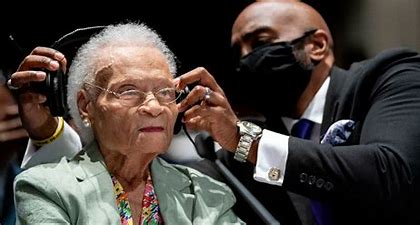
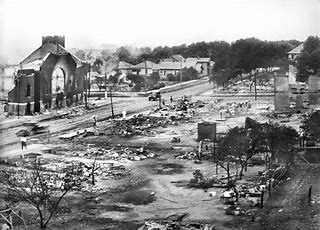



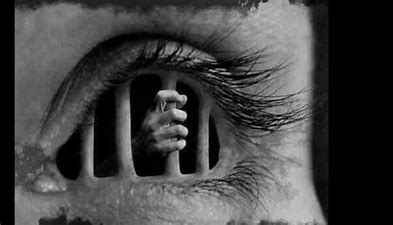
 The Sound Hole