‘Tis said beware the ides of March. Caesar may have done well to take heed, but perhaps not. It’s only the 15th of the month by our calendar, and since time is but a human construct the date probably has no more significance than any other. It’s only a measure of how far our planet has traveled around its sun. We commemorate many days along that orbit, but maybe the days we should mark are the ones during which we diverged from groupthink and made our own decisions, or stood alone against the opposite tide of common opinion. The days we took a stand, no matter how unpopular. The days we did the right thing, even when ridiculed and scorned by family and friends. The days we stepped over an insect rather than crushing it to death, the days we reserved judgment of the less fortunate, the days when we risked our comfort to change the course of the status quo. We should beware the days we could not make such marks, the days we did not follow our conscience, the days we preferred to wait for perfection rather than make small changes. We should beware the days we could not admit we may be wrong, because those are the days that we are so rigid the dream of something better is shattered. Beware the ides of our own arrogance and rigidity, because that is what will surely kill us.
Reflecting on some things earlier, I came to rest on power as addiction once again. I could probably go on forever about that, but it changes nothing. I’m back at the site of my most recent discontents again this morning, and sadly accept that most things here will never change. Although, maybe I’m wrong. I accept the fact that I could be wrong. That’s progress, at least for m.
Someone said a thing in a meeting a while ago that I have never forgotten – he said, “I tell my family that I am willing to die for them, but as person recovering from addiction, I must ask myself if I am willing to live for them.” That becomes a more pertinent question. I would die to effect change, to make things better for the world at large, for myself, but am I willing to live in that change. If the solution was to dismantle every thing I believe to be correct, every single thing I like, would I be willing to live in that new world if it made things better for others? Would I be willing to give up my comfort if it set things on a better path for others? I have to admit that I’m really not sure. That makes me rather sad. I would like to believe that what makes me comfortable and what I believe is the right side of things is correct for everyone else. I would like to believe that what makes me comfortable is of no harm to anyone else, but maybe I’m wrong.
I was at the dreaded Forum session again this morning, and specifically went to double-check the information they were communicating about voting in the upcoming primary. Most of it was technically correct, but there were resources they did not mention, such as voter guides in various places and candidate endorsements that are available on external sites. It was very milquetoast, and I interjected several times. Of course, I was cautioned to shush, because, well that’s just not how we do things. Bleh. I have been in that room an untold number of times when people have shouted out and over others, and they have never been turned to with a finger on the lips and cautioned to shush. Bleh, bleh, and bleh.
Am I willing to live in discomfort if that’s what it takes? Am I willing to live in oppression if that’s what it takes to free the rest of us? Will I rise up, a thousand times? Do I have anything left to give at this point? Being knocked down enough times, you don’t want to get up. But I suppose I do, every time, because truthfully what else is there to do? When you’ve been thrown under the bus repeatedly, you can lie there and watch the undercarriage roll over you again and again, but after a while that simply becomes monotonous. I don’t enjoy monotonous. It’s not a ritual that I find productive on any level.
So, to be clear, I’m not going to shush. I’m not going to speak quietly unless it is something very personal that deserves sensitivity. If it’s about liberation, or justice, I’m not going to be quiet just to make someone else comfortable. A friend was telling me earlier that she felt lost, and it caused me to think about how it feels to be lost. Sometimes we have to find each other until we can find ourselves. When one of us is lost, we have to call out the missing one’s name and sound the alarm one of us is in trouble. Elephants do that, trumpeting loudly to summon the rest of the herd when one member is in distress. So, don’t shush me, or any one – we may be calling our lost ones home.
If you are the prodigal daughter, where do you go when there is no longer a home to receive you? To whom do you return when the parent is gone? How do you reconcile and make recompense for having abandoned that from which you were formed? How do you move on with life, tether line flapping in your wake and bound to nothing?
I am my mother’s savage daughter, but I have cut my hair, and I have lowered my voice. This has not proven satisfactory nor productive, causing me to feel like some cowardly traitor hiding in the shadows of warriors. My heart wants to fight, my heart wants to rage, but my body is weak and easily defeated. How can I reclaim my honor and take my place with those who have fought the good fight and brought us to this point?
Maybe this is the source of a lot of my sadness, that I have been passionate only in the most selfish of ways, only when there was something I could gain. Only when there was attention to be garnered, adulation to be showered. I have been savage only when I had lost something that was precious to me, or did not get something that I desperately wanted. I am no warrior, and I am not always honorable. Is it too late to reclaim integrity, is all hope for change lost?
To that end, I have been pondering some bad tidings from my community of faith, and it feels like the gusty winds of betrayal in the making. This is my chosen home and chosen family, so I have a vested interest in what happens there. It’s been difficult to figure out why they suddenly feel the need for literal gatekeeping at the entrances, and a newfound obsession with controlling who enters. None shall pass without the tacit approval of the masters, and that seems wrong and very far off base for a so-called welcoming community. Why is this happening now, I wondered. There have been no incidents or threats to us specifically, and we are annoyingly risk averse. We did have our HVAC units stolen several months ago, but that hardly seemed directed to us specifically. A thief was apprehended weeks later in a neighboring county, and he had made a handy sum from stealing HVAC systems in the area. He enjoyed making churches his targets because there is usually nobody there at night; several of his victims were churches of various denominations. Nothing personal, just business.
So why this hysteria in my community to get a FEMA grant to enhance “security”, having gatekeepers to monitor who enters, possibly acquiring a golf cart to “patrol” the meager grounds. The golf cart would be funny if it wasn’t so troubling. None of this feels good, and I don’t understand it. Aside from the HVAC incident, we haven’t had any break ins or vandalism or intentional damage to the building. recently Yes, attacks on communities of faith on the rise, but that’s really nothing new. We’ve all been cautioned to be on the lookout for threats for several years now, so what’s triggering this urgent response?
The uncomfortable thought now rising in my head says this is related to our congregational growth. We’ve got more new people showing up, some as visitors and some as new members. Accordingly, our demographic is changing. There are more people of color and younger people wandering through our hallways, and I wonder if that has something to do with this urgent quest to do peg counting and make sure everyone who enters is “approved”. If that is true, even subconsciously, that would make me very sad. We finally have enough people of color to have a formal affinity group, and I have to wonder if there’s not a connection there. We might bring our friends, and then we’d have a whole lot of people of color, and then…lions, and tigers, and bears – oh MY!
Where is it written that the old timers, or elders as some may call us, have to know every person who enters? We are supposed to be a sanctuary, a safe harbor for those who enter. It’s a dangerous world, more so lately, but that is when sanctuary is needed most of all. When Mother Emanuel is Charleston and the Tree of Life Synagogue in Pittsburgh was attacked, they did not bow to the hatred. Their doors are just as widely open as before. They understand that often the price you pay to be a sanctuary is increased risk of harm to your places and your people. To become more filtered, however, is to give power to those who would infiltrate for malevolent reasons. Next, they will be wanting to have guns carried in our sacred space, at which point they will say goodbye to me. The terrorists have won if they cause us to change who we are and how we walk through the world.
There is an old parable about two wolves howling at your door. One is good, the other evil. You want to keep them at bay with food, so you decide to cut your bets and halve the risk by feeding one. The one you feed is the one that will stay; the other will starve or move on to greener pastures. I fear that we are feeding the evil one, and that’s the one that will stay. I don’t want to live with that one. I know where to find evil, and I don’t want it to be in my own sacred space. Fear can make the most peaceful among us take up arms, and that would be a surrender to the darkness of evil.
When I watch the live cams in Gaza and Israel while this interminable war rages, I can see the Dome of the Rock standing almost defiantly in the camera shot. Will it withstand this war, with its airstrikes and tanks and carpet bombs? Time will tell, but I suspect it has seen more in its lifetime than we can even imagine. Untold artifacts of the religious and everyday lives of Palestinians lie in shreds nearby, but the Dome stands. I would imagine, on some esoteric plane, it is still needed. It anchors a people who have nothing holding them except faith. More than 30,000 bodies have been lost there, but still the Dome stands, where Abraham was prepared to make his greatest sacrifice to support his faith.
My community is prepared to sacrifice nothing. We have 1st World problems of air conditioning units and solar panels, and we forget how privileged and fortunate we are. I could not care less if someone broke into that building and stole computers and television sets, sound equipment, kitchen equipment. That can be replaced. We have alarm systems (plural), and as I keep telling these fragile creatures, if someone really wants to get in there and wreak havoc, they are going to do that. There is no alarm system or bunch of yahoos with guns that is going to stop them. You can, of course, lower the risk of that happening as best you can but let’s not fool ourselves – there is no 100% safety guarantee anywhere. That’s the price we pay to leave our houses every day.
I often sense resistance to diversity and multiculturalism before anyone else realizes it’s there. Like a dog, I sniff things no one else can yet smell, and this has my nose twitching. My hackles are raised, and I’m watching and waiting. I don’t like being in that position, because it’s my sanctuary and I don’t feel safe right now. But, it is what it is. Unfortunately, what is is kind of stinks right now.
I am discouraged. It occurs to me that how I see the world doesn’t generally match up with how other people see the world. My response to supremacy culture isn’t working for me, and doesn’t seem to be effective. Refusing to play the game doesn’t change anything, but neither does playing the game entirely for self-aggrandizement. I have done both, and neither response yields a satisfactory result for me. What to do, what to do? At the moment, I feel largely stupid, and somewhat paralyzed.
This has happened before. I have what amounts to a plan in my head that seems plausible, and I have faith in it. I am going to be alright, I tell myself. Have faith. You have something to offer, you have a story worth hearing. I feel somewhat motivated, and have a fair amount of clarity. I’m moving, albeit slowly and have some modicum of confidence.
Then, like a lightning bolt, it all shifts to despair. I have no marketable skills, I will run out of money sooner rather than later, and I will have failed at life. I’ve been in la-la land, as my mother would say, and why in the world did I think I would be granted some kind of mystical salvation and a fairy tale ending to a life of bad behavior.
There is no game, there are rules to life that even 8-year-olds can grasp. Why do I believe the rules are different for me? I am no the prodigal daughter – there is no home awaiting my return, penitent or not. I have learned nothing on my journey, searching for non-existent treasure and the elusive adulation of a hero. There is no hero in this vessel, there may not be vessel at all. I am formless, and I have failed to conform.
I have rebelled against form over substance for most of my life, and it has gotten me nothing. I have rebelled against conformity, authority, repression all my life, and that has gotten me even less. In the final analysis, I have nothing, and time is running short. The clock ticks, the 2-minute warning has been issued, and still I run headlong toward some non-existent goal.
I should leave my brain to science, in the hope they can figure out what caused my brain to produce such circuitous and meaningless thought processes. Maybe there is an answer to what happened to all the hopes and dreams of someone like me, who saw it all slip through her fingers over more than half a century of trying desperately to hold on to it all. I tried holding on, and I tried letting go, but the result was the same – I was left with nothing but the war going on in my cerebellum, and I was losing.
It’s not enough that I can be a friend. It’s not enough that I care about people. It’s not enough that I treat my dog reasonably well, or that I have reconstructed my life enough over the past 35 years to no longer cause harm to people. Nothing seems to be enough, unless it is that which is provided to other people. What is provided to me is not enough, never was enough, never will be enough. I don’t understand how this life works, how this body works, how my brain works and it seems to be too late to change that.
I have been doing a lot of writing lately, and that plus $1 will get you a share of nothing. When I started doing that in December, I foolishly thought it might lead to something I could publish. I’m just not that good. Writing is a dangerously mediocre skill that I possess, like the guitar and the flute. I will never be considered good at it, although I can make a pleasant noise from time to time. It would have been nice if I was actually good at something, anything, but mediocre is my niche. That frustrates me enormously.
So what is there to do with frustration, and discouragement? Do you simply live with it, suck it up as they say, and keep walking? That is mostly the only solution I have ever found, and those feelings have been life long. There have been short intervals where things appeared to be looking upward, but those have not been anything close to the dominant trend.
In some ways I have given up. I no longer entertain even the possibility of a life partner, or financial stability, or a body that cooperates with me. There is no dream of offering something that I have created to a receptive audience, because I do not have any product that is marketable. I’m not sure if my obsession with having that is a function of an oversized ego, or just the result of not finding true purpose. Whatever the answer, I wish that giving up would release me from the discouragement, but it has not.
Does it even matter? I don’t think it does, actually. There is nothing in the world that will be changed because I find purpose, or create something that is better than mediocre. When I am no longer here, will I have left anything that matters to anyone? I don’t know, but I suspect not. Perhaps legacy is a false notion anyway, and ultimately not something that should be desired. I won’t have one, so I really don’t need to spend time on figuring out how to navigate it.
I want to know why, why it has to be this way. I want to know what I failed to do, but in some ways I know. I swallowed what meant the most to me, I chose to please everyone else but myself. I did not have the courage to stop people when they trampled me, ran over me, abused me. I did not have the courage. I may still not have the courage, and that makes me sad. You never envision that your life will turn out to be one that almost was, that was never quite realized, that was full of so many twists and turns that you have travelled thousands of miles inside a 10-foot radius, and gotten nowhere.
This too shall pass, and I will walk the walk again tomorrow. And the next day. The rock will be heavier, but that is the way of it. If I come here again, I pray, quite literally, that I can remember some of this on some esoteric level. I feel as though I have been here before, but came back with spiritual amnesia. That was a low blow. I’m trying to leave bread crumbs in the corners I’ve passed and dry wells I’ve visited. There’s no reason to do this again, but who am I to say? I do say, however, that I want something better next time, something beyond my wildest dreams this time. Laissez les bon temps rouler, cher.
Ya know, I almost lost my cookies with my UU congregation this past Sunday. A wonderful lady from a local healing center, which has a leaning toward justice, was to be the speaker. An African-American woman with an M.Div. and tons of experience in the arena of social justice had been invited to occupy the pulpit and bring her message of racial equity and social response to this hapless bunch of well-meaning neo-moderate mostly white people. Unexpectedly, she literally offered me salvation, not only because she is a phenomenal speaker with a phenomenal message, but because I so desperately needed to hear a Black woman give HER message to our congregation.
I did not realize what a tremendous need that was for me. Her message was one that called for authentic ministry, and I do believe that is clearly our work. I am sad to say, however, that I have my doubts about whether we are courageous enough to do it, and that makes me incredibly sad. Accordingly, I feel as though I need to share why that is, and how it feels to be a member of a racial, ethnic, and cultural minority in our house. Just for giggles, and just for my survival
Ineveitably ,things happen in a shared environment – an errant word, a microaggression, differences of opinion and perspective. These are usually functions of humans competing for space and power, and appear to be inevitable. These incidents may not seem important to most, don’t seem related to promulgating the status quo, and often are not seen relative to the closed caste of dominant culture. When viewed through the lens of the non-dominant culture, however, it’s a different picture.
My experience this past Sunday illustrates how seemingly random and unconnected events might ultimately prove to be representative of a cultural overlay that ultimately contradicts our stated identity, and shared vision for the future. Recognition of this overlay presents some of us with a cognitive disconnect, which is distressing. That distress raises deep questions that cause some of us to doubt the integrity of this chosen community, such as whether there is true racial and ethnic equity here, and how power is disseminated amonst us. Is this yet another example of well-meaning people who are not prepared to go to any lengths necessary to realize the change they espouse? Those are questions that are painful to ask, and contemplating the answers inspires even more discomfort.
Sunday was an unexpectedly hard day there for me. I got confused about the date for the CUUPS appearance at Forum, and showed up there to show my support for that. Unfortunately, that presentation occurred the prior week, and the topic for the session on Sunday was policing and crime statistics (presented by Antonio Reid). It was a great presentation, though, although the attendance was a little light. However, those present, including myself, were engaged. Someone, a member and Forum regular who shall remain nameless was compelled to make the statement that Native Americans in this country were not killed in mass quantity by European colonists, but by internal conflict and disease. Huh? I can’t even remember why that came up since we were talking about civilians killed by police in present day United States. Someone sitting next to this person, who happens to be a retired university history professor, jerked as though someone had shot him when those words were spoken, and turned to this person, saying simply, “That’s not true.” I, on the other hand, was on the verge of levitation because the comment was so painful. The party of the first part continued to support his claim, albeit briefly, and pulled out his phone to offer evidence and citations for the statement. No one was particularly interested in his data, but I digress. Strike One.
When the session had reached its end, the Forum host explained that no further comments or questions would be entertained…except their own. The host laughingly stated they had a comment on the material presented, although the session was over, but intended to “exercise personal privilege” in order to speak their piece. If that had not been so sad, it would have been funny. Ball One.
The ridiculous comment that minimalized the Native American genocide inexplicably caused my nerves to stand up at attention and jangle, but I proceeded to the Sanctuary for the service. I wanted to see the speaker at the main service because I’d heard such incredible things about her, and was looking forward to it. The service began, with no mishaps or glitches, and it soon came time for the speaker to begin. Just as she began speaking, a group of people at the back of the room – all of whom were determined to squeeze themselves into the chairs on the back wall rather than proceed to numerous open chairs farther into the room, began having a giggle fest over their efforts, with one person somehow sitting on the lap of another. I tried to give them a signal to shush, but they were oblivious. I couldn’t hear the speaker. This upset me because I was already jangled by the Forum experience, and so I stormed out because I felt it was incredibly rude to be inattentive to the speaker. I think I called them idiots in a stage whisper on my way out but…my bad. Ball Two.
When I got to the lobby, I thought I might turn on the radio out there to catch the broadcast of the sermon on the FM channel, but as I stood close to the door where the radio is located I realized once again how irritating and misguided (in my opinion) the new door-locking policy is. The policy requires that all but one of the main entry doors be locked after the main service begins, including the handicapped door. I have no idea what this does to enhance security, and it creates a bottle neck at the single point of entry. It is gatekeeping at its most literal finest.
I will make a diversion here to note that I attended a Forum session several days ago when the Safe Congregations Committee presented a status on their efforts to keep the congregation safe. This included the nonsensical door locking policy. The posture and direction demonstrated for purposes of fulfilling their charge has been an issue for me ever since. There were many unacceptable statements in that team’s presentation: they proudly admitted that locking the doors enables volunteers to scrutinize who is requesting entry to see if they “look ok”; they have considered engaging armed security (volunteers and contractors) in the building; they have contemplated acquiring a golf cart with a flashing light to “patrol” the campus, because they are preparing to apply for a FEMA grant to improve security per FEMA and local police guidelines. This has been eating away at me ever since because it seems to present numerous opportunities for practicing the kind of objective judgementalism that has resulted in harm to people of color all over this country.
When Knoxville UU was attacked years ago, when Mother Emanuel in Charleston SC was attacked, when Tree of Life in Pittsburgh was attacked they didn’t close their doors tighter, they opened them wider. Temple Emanuel in Winston has a police detail that sits outside in a police car during their services, but the doors – and their eyes – are open. We are a community of faith, and it is totally disingenuous to celebrate your welcoming posture while locking doors to guests. What faith are we claiming when authority is rendered selectively to a chosen few judge who is worthy of sanctuary?
Regardless, I was already irked and commented to a gatekeeper – titled a “Watchful Shepher” (a term I have despised since it was first introduced) that I did not see any value in locking all but one of the front doors, inclusive of the handicapped door, and that if someone was urgently trying to gain entrance in an emergency (such as being pursued) they were screwed. They didn’t understand and said that anyone could exit via the push bars on the doors. I reiterated that I was talking about someone trying to get IN, not out. The response was silence and a blank stare. Strike Three, and OUT.
I have more to say about the music for the morning service, but that’s for another time. I enjoy the accompaist’s music tremendously, and he explained that he was offering a couple of jazz classics (one by Duke Ellington, maybe? Can’t remember, truthfully) that morning; he is a fine jazz pianist. A couple of other vocals were included in the service, and in my opinion they had particular significance to the Black community (Balm of Gilead being one). Given the timbre of the sermon and the fact that it’s Black History Month, I was a little peeved that we couldn’t have found even ONE person of color to contribute – even with recorded music – to the musical performances that day. But it is what it is.
I also have a bit more to say about the door-locking issue, the non-inclusive message that it sends (particularly in locking the handicapped entrance), and the FEMA grant efforts but that’s another story for another day. I’m from New Orleans, and FEMA doesn’t mean diddly to me. We’re a community of faith and claim to be a sanctuary; that is not the business of FEMA. There are all kinds of efforts toward congregational safety going on within our national association of congregations and their partner organizations. There are resources available to maximize congregational safety, align with best practices, acquire training, etc. Those are not militaristic or utilitarian strategies, and it makes me very sad that we have not explored those. If we have the need for money to do specific things related to security, we might consider applying to the national associations funding program for a grant.
But, back to me – I left the lobby and went to my truck and listened to the sermon from the parking lot. My first instinct was to leave the grounds completely, but I stayed and it was the right decision. I went back inside and spoke briefly to Love’ after service was over, thanking her for her presentation and telling her how meaningful it had been to me. I was near tears because it had calmed me and spoken to me in a way that nothing else did that morning. She probably thinks I’m nuts and I had to reassure her that I was not stalking her because I began feeling like the enormous Mr. Staypufft in Ghost Busters, more or less clogging up the exit route. But I digress.
All that being said, I had the good fortune to run into two other people of color (still a surprise to me that such a thing can happen) after the service was over and most everyone else had cleared out of the sanctuary. I was able to vent to them about my experiences that morning; I was still very much off balance, and I didn’t understand why it all felt so bad. One of my conversation partners summed it up very well for me saying, “It was just too much. Any one of those things was … a thing. All together, it was just too much.” And that’s exactly right. It was too much. Some days I deal with it better than others, but Sunday was just not that day. After it was all over, I stayed and talked with my cohort for quite a long while. They empathized with my feelings and shared their own experiences and reactions to the same and other incidents. Having a group for PoC is a such a tremendous gift – I was here long before there was such a thing, and it has changed things a great deal.
There has been some aftermath to my Sunday experience, and it has taken me nearly 2 days to completely settle myself. That’s just how I roll, though, because I process things interminably and dramatically, and i have family trauma and blah blah blah, and that’s my stuff. I walk a fine line, though, between what’s my stuff and what’s their stuff. Right now, I feel as though I am beginning to show myself at the there a bit more, not being quite as conciliatory or assimilative as in the past. I hope that means that I am showing up more authentically than I have previously, because I’m no longer willing to swallow my own disturbance for the sake of simply keeping the peace. I deserve that.
The long and short of it is that I am looking to bring all of who I am there, through even the one door that is unlocked and presided over by a gatekeeper. Feeling as though it’s not a given that I can do that makes me angry, and frequently enrages me, because that’s what I was told was the desired outcome. My rage is front and center but it’s only because I care THAT fucking much. An old spiritual teacher once told me that anger is the blanket we throw over our fear, so I need to discover the nature of the fear. It has many levels, including a trepidation that nothing I do here will ever change one thing that makes a difference, a difference to racial equity, to multicultural acceptance, to broader inclusivity. That all of this is just talk and when it comes down to darker and more dangerous times they will choose their own comfort over those of us who are most at risk. That it’s all just pretty words and good intentions and that I will eventually leave these people exactly where I found them, in an beautiful but insular silo made of bulletproof glass and privilege
The abject terror of it all, however, is the paralyzing horror of disempowerment, when you are not sure you will be able to save your own life. You begin to wonder if you will be left behind when it’s the last train out before the cataclysm, and that you can’t do a thing but watch as the caboose fades into the mist. Wondering if when the others come for you, you will have have no defense while the doors close one by one up and down the line. It is rage because no matter how many times you’ve warned of the risk of inaction, the recapitulation to status quo, the rejection of change you are still left behind with the echoes of thoughts and prayers, and pledges of right action when it is the right time. You are left behind to grieve and wonder if it was all a lie or simply a mirage. False hope in the midst of unrelenting despair.
My heart is really too big for my own body, but it’s what I come to the table with. It’s also what I have to lose, so the stakes are very high. I have heard that one’s faith, or community, has to break your heart before it is yours, and before you are theirs. I don’t know if that’s true but my heart keeps breaking and I’m still not sure if i truly belong to this place or if I am simply tolerated. As mad as I get, as hurt as I may be, as many times as this place breaks my heart and then wads it up to throw it back at me with a closed fist, I’m not looking to go anywhere. As many times as people expect me to carry the water and chop the wood , I’m not looking for the exit; I know where it is. My mama told me a million times to NEVER let ANYbody run me out of ANYwhere, so if nothing else I honor that commitment. As she would say, they will have to sweep me out with a broom.
I’m not asking for anything, except maybe the time to digest this. Unfortunately, I rarely bear discomfort in silence so I will more than likely be a pain in the ass whining about one thing or another going forward. Because, as I heard in a song, “I am my mother’s savage daughter, the one who runs barefoot cursing sharp stones. I am my mother’s savage daughter, I will not cut my hair, I will not lower my voice.” (“Savage Daughter” – Sarah Hester Ross)
I still have a relatively clean colon. My colonoscopy showed me a squeaky clean anus and lower GI, but I’m still having a few issues. My lower GI ultrasound was reasonably decent, although the results showed that I have gallstones and a fatty liver. No big surprise there, given the symptoms. I knew I would have to clean up my diet a bit, and of course the answer to every problem in my world is to lose weight and exercise more. If my problem is the attraction of narcissists to my orbit, losing weight and exercising more should fix that as well, I would imagine.
I’m continuing to read the Isabel Wilkerson book Caste: The Origins of Our Discontents, and it is magnanimously slow going. Her analogy of the current situation in America, as living in an old house with the common problems of an aging structure, really appeals to me. We didn’t cause the cracks and uneven floors, but if we’re going to stay we have to take ownership of those problems. But we won’t do that, while still clamoring for things to be as they once were before time and nature took their inevitable toll. We can’t go back in time, but still we try rendering history in edited form, and become violently frustrated when that doesn’t work.
Recently, I attended services at my UU Fellowship, and there was a guest speaker that had been highly recommended. She’s an African-American woman who has a local ministry known as 18 Springs Meditation Center. I was excited to have a person of color in the so-called pulpit, and she did not disappoint. Unfortunately, it was difficult for me to experience her intense and dynamic offering because I had been so incredibly disappointed before she uttered her first word.
There’s a counter-culture casual feature that has been a part of Sunday morning programming for many years, known as Forum. This is somewhat common amongst UU congregations, and offers an opportunity for congregants to participate in informal sessions that generally spotlight an issue or subject in a brief presentation, followed by questions and comments from the attendees. It generally occurs prior to the formal worship service, and is sometimes a contentious battle of the intelligentsia and advanced degrees. I am not a huge fan of it in my congregation, primarily because there is a core base that feels it belongs to them, and is frequently misinformed about a plethora of subject matters. It’s also primarily a group of older and entitled dominant culture members – cis-gender heterosexual white males with disposable income, too much time on their hands, and accustomed to being heard.
I attended the Forum accidentally this past Sunday – I thought the offering was to feature the formational pagan group at the Fellowship, but I discovered the pagans had been the presenters for the previous week’s session. When I walked in, I was surprised to discover the present was an African-American male set to discuss the empirical data he had compiled on police-involved deaths of civilians nation-wide. That piqued my interest, and so I decided to stay. That proved to be a mistake.
The speaker intended to present only the data, and the obvious disparities in the rates of death across the usual demographics. He also discussed how the percentile figures are obtained, and problems with that methodology. I found that very interesting, and raised a couple of comments about how law enforcement often categorizes incidents and crimes in ways that often prove to engineer a questionable narrative. For example, if a woman is attacked ina domestic violence incident, and she is sexually assaulted, the report may be categorized solely as a domestic violence incident and the sexual assault is lost to statistics that are tallied for sexual assault. It can get complicated, and often might misrepresent trends in criminal activity if one doesn’t understand how the statistics are compiled.
As the session went on, there were a couple of near-horrifying comments from attendees. One particularly egregious offering was that large numbers of Native Americans were not really killed by European settlers, but instead by their own internal conflicts and disease. Hmmm. Several people had issues with that, including a retired history professor who turned to the person who made that statement and said, quite simply, “That’s not true.” Another erstwhile participant, who actually hosted the session, called the session to an end when the prescribed time had expired, but in particularly bad form she admitted there were a few minutes left and she was exercising her privilege to offer a final comment of her own. I don’t know what she had to offer, because I left. Strike One.
The nauseating “blame the victims” nonsense that minimalized Native American genocide, and the annoyingly predictable “exercise of personal privilege” cause me to become rather cranky but I continued on to the other end of the building for the formal worship service. The afore-mentioned speaker did not disappoint, although before she could get started there was a gaggle of women at the rear of the room, where I was sitting, who found it hilariously funny to push on each other in order to fit into the limited seats available. One of them sat on another, claiming it was an accident, but they all erupted in peals of high pitched giggles, drowning out the speaker. I had turned and glared at them no less than three times, but to no avail. Finally, I got up and stormed out, calling them idiots on my way past (which they did not even hear, being so wrapped up in their own amusement), and slapping open the door to the lobby. Strike Two.
Once in the lobby, I was so discombobulated that i wasn’t sure if I wanted to stay or go, but knew that I wanted to hear the speaker. There were a couple of people in the lobby, part of a self-important group that claims they are keeping a watchful eye on things for security purposes. The only thing they are keeping an eye on is their own power over who can enter the building. They have enacted a ridiculous policy that locks all but one door out of four to enter via the main entrance. Even the handicapped entrance is locked, but no worries, if you are handicapped and need entrance you need only wave or get the attention of one of these folks and they will open the door for you…if you look “ok”, that is.
I’ve said on more than one occasion this door locking policy is nonsense, and unacceptably non-inclusive. Further, I pointed out that having only one entrance door open creates a bottleneck of people trying to enter, some of whom may need to enter quickly for physical reasons or to meet scheduling obligations for the service. Because I was already irritated from the Forum debacle and the giggling women in the service, I was ready to go ballistic on these fools because they have been a stone in my shoe for a while. I pointed out to them once again that locking the doors does absolutely nothing to provide added security, and that it’s an issue of inclusivity when they lock the handicapped door. I made one other point on Sunday for which they had no answer – I said what if someone is being chased or threatened by someone outside, and is trying to enter in an emergency? The gatekeeper said oh, no worries, there’s a push bar on every door so you can always get out. It’s not getting out, I repeated – it’s getting in. Why do I need to wait for YOU to decide whether I’m worthy of gaining entrance if I am in an emergency situation and need … wait for it … sanctuary? Silence. No response. Strike Three, and you are OUTTA there.
I stormed out the front door in question and retreated to my truck, where I tuned into the broadcast of the service. The speaker was still talking, thank goodness, and I hear the bulk of her incredible comments. I needed her message, which was all about authentic ministry. Not ministry to see and be seen, or to have your name on the socially acceptable lists, or to pat yourself on the back for good deeds, but authentic ministry that helps people with no thanks or recognition expected. Authentic ministry that lets everyone know who you are by your deeds, not by your advanced degrees or your money or your beautiful building with solar panels gleaming in the sun. By what you do, by how you live, by standing in your integrity and walking your talk. In my not so humble opinion, we are not there yet. We are more concerned with making ourselves comfortable.
At this point, I’ve been saying the same things for more than a decade, that we don’t walk our talk, that we talk a good game but still present as privileged folks who pick and choose who is worthy of entrance, literally and figuratively. Do you have your environmental convictions in place? Got a compost heap, recycle, conserve energy, don’t let your gas guzzling car idle too long? We might look upon you with favor if all that’s true, but to be really “in”, how much cash are you contributing annually? Do you contribute to the big auction fundraiser? Drop a few extra dollars in the plate for supporting worthy non-profits?
I hate being so hard on them. but I despise the feeling of mere mortals like us feeling that we get to decide who is worthy of entrance to our facility is a bit nauseating. There are now literal gatekeepers. This is not what I had in mind at the entrance to a sanctuary; there should only be smiles and welcoming hands. I brought up that when other churches, namely Mother Emanuel in South Carolina and Tree of Life in Pittsburgh, experience the heartbreak of active shooters that took the lives of their congregants, they opened their doors wider. They did not make it harder to get in, they made their welcome more broad. They cannot bring their dead back to life, or go back in time, but they are intentionally not allowing those tragedies a role in defining their identity going forward. We are letting something that has not happened define who we are now, and that just seems like scaricity mentality once again.
Despite how much I hate what is happening in my Fellowship, I’m still not leaving. I will fight. I’m ready to bust the established infrastructure to shreds…with love and concern. Sadly, if there was somewhere else for me to go here, I would be there but this is the only game in town that even comes close to my beliefs and my faith, and I’m not going gently into that good night. My mama always told me to not let anybody run me out of anyplace I wanted to be, so I’m holding fast to that credo. They are going to have to sweep me out of this place with a fucking broom if they want me out, so I’m bringing it. I hope they’re read.
It is said that first came the word, but we did not have ears. It is said the light came next, but we did not have eyes; all we knew was silence and darkness. So we learned to make light and filled the void with our Selves. We took up all the space with our thoughts, our wanting, and our questions. We blocked the light and made a lot of noise, and that seemed good for a time. Until it wasn’t. Now we have grown tired of our container and seek new voids to fill, because conquest is in our nature and humility is not. Unfortunately, we have learned nothing about how small a space we occupy, how truly fragile we are, or just how much we have yet to learn.
We are plowing infertile ground, attempting to harvest old reality from over-plowed soil. It’s not only the soil that is now barren, it is the collective spirit of a people. Our fear has rendered us rigid and non-resilient. We’re not sure exactly what we fear, but that’s really the nature of it – the unknown. We grieve the days when life went according to a known plan, you gave a dollar to the panhandler on the corner and they disappeared from view for at least a day. Maybe they went to the nearest bar, maybe the went to the soup kitchen, but you had done your duty. If the panhandler was no longer in your line of sight, you had made a difference.
Today, if you hand the panhandler a dollar, they may smile indulgently but they do not leave. They wait for the next benefactor, and the next, and the next. They may be there for several days, or weeks until law enforcement runs them off. You aren’t sure that your well-meaning donation has done anything at all, and you still have to look at the beggar. It’s uncomfortable. Moreover, you hear stories about how some beggars are simply con artists who have means but use the street corner as their company office; they’re probably making more money than you are. That’s uncomfortable as well.
We are living in chronic discomfort with no end in sight, and once again, it’s the unknown. Will this ever get better? These bums need to get a job, and stop making us all so uncomfortable. Back in the day, we didn’t have all of this panhandling, at least not to this degree, because people did what they had to do to have a roof over their heads and food in their bellies. But now…people are just…lazy.
Again, the discomfort. This has to be someone’s fault. It’s the Democrats. No, it’s the Republicans. It’s the Governor. No, it’s racism…and don’t forget the Russians. We just need to go back to when things were good, when people were happy and didn’t shoot you for looking at them wrong. When kids were polite and everybody stayed in school and got a job and went to church on Sunday. Bring back the good times, and get rid of the people who ruined it for everybody.
The beginning of Birth of A Nation says that everything was fine in the U.S. until the Africans came. Then it all went to hell, so obviously, it’s the fault of the Africans. That would be funny if it wasn’t so sad, because everyone knows the Africans didn’t wake up one morning and decide to descend on America of their own accord. They were kidnapped and hauled over here like sardines in the cargo holds of seagoing vessels, across thousands of miles of open ocean. Those that lived became property of other people, and were used for unpaid manual labor solely for the benefit of their owners. But they knew their place was at the end of a lash, so mama was happy, and if mama was happy, well you know how that goes. Those were the good days, depending on your perspective.
People clamoring for a return to the good days cannot understand that you can’t go home again. The world has changed, the landscape has changed, the economy has changed. Buildings have crumbled, there are potholes in the streets, we’ve gotten older. We cannot press a rewind button and travel back in time, before news was immediately available, before Mr. Google was ready and waiting to find answers to all our questions about banking, about agriculture, about real estate, about lifestyles of the rich and famous. We cannot retrofit our current reality with 19th century norms. Even so, there are some who attempt just that, sand the results are disastrous.
We are socially de-evolving, returning to a time when justification and rationalization were the rule of life, if not law, and could dull the conscience. We can be as heartless as we pleased if that got us closer to what we desired. Ultimately, we desire comfort, and that usually means predictability and being in control of our circumstances. I am far more comfortable when I know what’s going to happen in the future. In a capitalist society, that is daunting, however, and the most reliable method of control in that economic model is to broker labor. If you don’t have to pay for that labor, even better. And that’s how chattel slavery became the preferred get-rich scheme of all time – laborers became saleable property, and their labor yielded a marketable (and profitable) product, so it was a win-win scenario for everyone. Except the enslaved people, but let’s just not speak of that.
We crave material gain but pursuit of it makes us nuts. Absolutely nuts. We are quick to become immoral, insensitive, and bloodthirsty. Don’t stand between people and their money. Murders are committed for illicit acquisition of money, or the theft of money, or the loss of ill-gotten gains. The panhandler on the corner without an 8th grade education is probably able to explain the basics of capitalism as well as any economist, because in its base form it’s all about how I can spend one dollar to make 5 dollars, and everybody knows the easiest way to do that is to broker the labor or do it myself. If I pay someone else the dollar to perform a task for a third person on my behalf, then charge the third party $6 for the job. That covers the first dollar I spent on the worker, and gives me a $5 profit. If I expand that exponentially, my eyes will sparkle with potential profit. For me. Only for me – $5 multiplied by how many 3rd parties I can engage who need the work performed. Of course, in our environment we have 4th and 5th parties who charge licensing fees and taxes and insurance but that’s another story entirely. There’s always another story, but we just want the $5 bill.
We have woven a very tangled web, and like most addicts we are at the point where the thrill of the profit isn’t working the way it once did. In some cases, it’s not working at all and misery looms. We want something more. We need the high of success, the elation of winning. So, let’s go to Mars. Yeah. That’s the fix. And the Moon, too. We can build manufacturing bases and engineer supply chains because that will provide a feeling of competency and control once again. As a value-added benefit, there’ll be no real estate charges or EPA concerns or any of that pesky regulatory stuff. We planted our flag there, so it’s ours free and clear. Let’s get started! It’s a brand new world – a new New World (sound familiar?). Our world is kind of old and dingy now, and it has problems, but Mars is bright and shiny and by the time we’re finished terraforming it’ll be spectacular. This will be the largest designed community ever. People will live and work there, and there will be retail generators and some resorts, and maybe casinos, but without all the crime and those undesirable people. We’ll do it correctly this time, and before you know it, we can leave Earth behind and be intergalactic citizens. A new elite! What’s not to love about this?
I no longer claim the Catholic faith as my own, and possibly never did. My anger and resentment toward the institution of the Roman Catholic Church have faded over the years, most likely due to my age. Admittedly, however, I still harbor certain resentments and unhealed wounds regarding that venerable (?) icon of my past. Those resentments are largely to do with the church’s unyielding loyalty to misogyny, and its stalwart homophobic posture. More recently, the protection and harboring of pedophiles has been maddening, particularly when they did nothing to counter the pubic narrative that equated pedophilia with homosexuality. They will have to live with that; they are paying through the nose in legal settlements related to the pedophilia scandal, which seems fitting. The Archdiocese of New Orleans is officially bankrupt largely for that reason, and a 91-year old former priest was just arrested for sexual abuse of minors in the 1960s-1970s. Bless me father…or not.
Although I am extremely distant theologically from institutional Christianity and the so-called “organized” religions (many of which are anything but religions and should be classified as political organizations, but I digress), I really have no philosophical argument with the heart of Christian faith. I simply do not believe the accepted Bible is the literal word of a deity; it was written by human males based on their own self-interest. More oppositional is my belief that the historical figure we know as Jesus Christ is not necessarily a divinity, and even if so, that he is representative of the sole divinity of the Universe. Those are fighting words for most Christians, but I never get an answer when I ask what “God” needs with a nuclear family. At this point in my life, though, I am more than content to keep my theological leanings and questioning to myself. It’s really none of anybody’s business.
Regardless of all that, Catholic habits are sometimes hard to abandon. I still don’t eat meat on Fridays. I still call on Jesus Christ and plead “Lord have mercy” in a foxhole, when the chips are down. Christmas and midnight Mass are meaningful theological statements, as is the Epiphany although I’m not sure I’ve ever accepted them as the literal events I was taught. But, there’s something that feels sacred about them. Mardi Gras is similar for me, and perhaps that’s just a product of the culture of my home town. The whole increasing frenzy from 12 Night to Mardi Gras is like nothing else in my experience. Ash Wednesday not so much, Lent even less, but the revelry of Mardi Gras is something else.
This year, Mardi Gras seemed to loom larger in my reality than it has in many, many years. I was glued to live cams on Bourbon Street and videos of parades. Some of that could be a bit of homesick, but it felt deeper. I was thoroughly fascinated with the traditions behind the mirth and wild abandon, and those are not simply religious traditions but social statements. Maybe it’s because I’ve been contemplating the Isabel Wilkerson book Caste: The Origins of Our Discontent, or maybe it’s just the next step in my constantly evolving effort to come to terms with racism and social justice in current times. Whatever it is, I am constantly unsettled when reframing things from my earliest and most innocent memories as the often ugly realities they are.
The experience of Mardi Gras as a child was all about fun, and making noise. Catching beads and doubloons, eating until you were sick, no school, going to the bathroom behind the open doors of parked cars. The bands, the floats, a sensory cornucopia. Costumes and candied apples, and my favorite caramel popcorn. The Mardi Gras Indians were always a treat, and we never questioned the meaning or significance of that. It was somewhat like Halloween in February – you got to suspend reality and get tons of candy. What’s not to like?
Since moving away from home I am still unaccustomed to having no limitations on travel or business on the the Monday, Tuesday, and Wednesday of Mardi Gras. New Orleans shuts down entirely for those days, and you’re a fool if you think you can get around that. Folks prepare for it like a hurricane, which is exactly how it functions. Parade routes will detour you, stores will be closed and supplies will have sold out long ago. The only difference might be that you are likely to have electricity, but the rest of it should be treated like a camping experience. It’s just a part of living there, and you deal with it. Tourists love it, of course, because they can go back to Peoria or wherever they came from, knowing that what happens at Mardi Gras stays at Mardi Gras..unless you manage to get filmed with your tatas or your weenie hanging out trying to score beads. That never goes away, as so many have been surprised to discover, but you only live once.
But, back to why year’s celebration brought up such issues for me. Watching the live streams of crowds and parades was entertaining, and caused me to reminisce about the past again but that was fine. Some of the floats were incredible works of art, and I have always loved seeing that. Marching bands always have a special place in my heart, since my father was a band director when I was a little kid. I know how much work goes into marching, and how much skill is actually required to play and march in cadence. It’s not as easy as people might think. The crowds seem to really appreciate the music, and that feeds the musicians, and I like to see that. That part of the experience is probably the most genuine, and the most diverse – neither age nor race nor gender really matter. People get into the rhythm and groove to the beat until the next float comes. You’re probably deaf by that time, but nobody really cares. It’s an ad-hoc community that wants to be there and knows its reason for being. Nowhere else does this happen in a high crime city.
Juxtapose those crowds and that diversity, however, with the elitism and exclusivity of the old line carnival krewes. That’s where I was struck dumb seeing the incredible contrast between the party and the royalty behind the party. The krewes are social organizations, chartered businesses, that host parades. Their dues-paying members plan the parade, selecting theme, contract float construction (which is impressively expensive), arrange for bands and float drivers, route permits, security, float riders’ costumes, and the all important throws – beads, doubloons, commemorative plastic cups, etc. Participation in some krewes is more expensive than others, but the cost is not for the faint of heart.
The financial requisites of a Mardi Gras krewe is a complicated layer of the class hierarchy, but when it comes to the old-line krewes like Rex, there’s a lot more at play than simply money. For many, it’s lineage and heritage, it’s legacy, and it’s bestowed privilege. If your mother was a queen of Rex, it would not be outside the realm of possibility that you could have the same honor. If your brother was a page, keeping the trains of the royal gowns unfurled at the ball, the odds could very well be in your favor to be chosen for the same honor. There is really no merit involved; you are chosen. In the upper realms of the patriarchy, this is how things are done, and expected. What reason would there be to change that?
If these sorts of arrangements do not constitute caste, then nothing does. You are born into a role, it is your birthright, you have done nothing to earn it. Those who do not share your genetic profile will never be a part of this, no matter what they do or who they are. This is how European monarchy has always operated, and the Mardi Gras krewes emulate that fixed hierarchy perfectly. If that was limited to fantasy once a year, it might be seen as merely quaint, but those lines of influence project much farther than a single night of the year. In Crescent City society, as in more formal monarchical lines, caste membership assures one of an entitled and privileged life regardless of anything but your birth certificate.
Can we recover from this birthright caste, from the overwhelming loyalty to entitlement and expectation? It seems unlikely that we can without some destructive cataclysm. Caste has become a system, and systems take on a life of their own that is dedicated only to self-survival. Once the system develops infrastructure, it becomes a toxic virus that mutates at will and is nearly impossible to destroy. Once it infects the genetic code itself, I don’t know how it will ever be rooted out.
Perhaps that is our work, though, to overcome the instinct for perpetuation of that which has always been with us – the addiction to comfort, greed, and power. It’s a tall order, and many of us see no reason to aspire to such a lofty goal. And therein lies the rub. We’ve got to have the ability to dream again, to imagine a world without our toxic past and devoid of hatred as a default. Oppression has muted so much of our potential to dream that we may need to build up that flabby muscle again, igniting a spark of inspiration from the depths of chaos if not absolute nonsense. We can imagine our way to a better genome, a better way of being, whether we understand what a genome is or not. Recovery work is never easy, but you have to admit the old way doesn’t work any longer. Understand that you’re going to be uncomfortable for a time, but the end result will be life beyond anything you can imagine. Understand that change is not the enemy and that not moving will keep you stuck in the misery you most want to escape. Understand that you do not understand, but move anyway. Understand that it’s going to take a minute, but have faith that we have not come all this way for nothing. It’s going to be OK.
I was reflecting on artifacts earlier, objects I have that evoke memories and feelings. I have several of these in my apartment; there were more a few months ago but I had to purge because things were out of control in here. But there are some that occupy space in here, because that’s my pattern, to hold on to reminders of meaningful moments, events, phases.
In my closet, I have two dresses that belonged to my mother. She left them when she lived here in 2005-2006, during those horrifyingly chaotic months following Hurricane Katrina. She was essentially homeless, because the house I grew up in, and in which she took so much pride, was uninhabitable. More than 8 feet of water had occupied the house for more than 10 days, destroying the memories of several lifetimes. Like me, she held on to what had been memorable for her, but the invading floodwaters had no sentimentality. Photos, records, sheet music, a piano, all mingled in the swirling waters coughed up by Lake Pontchartrain when the earthworks designed to keep the lake at bay failed.
My mother had coveted those memories with a nearly violent force. I can still see the stacks of old photographs, some form my childhood, before I was old enough to speak. When I got my Easy Bake Oven, when I was pushed in a stroller down the sidewalk of some town. My great grandfather holding me as an infant. My aunt’s wedding, which I remember vaguely because she almost fainted during the ceremony since it was summer in Louisiana and she wore a dress that seemed nearly bullet proof. My grandmother’s photo album of me, titled “Grandma’s Brag Book”. My parent’s wedding album; I remember a particular picture of them cutting the wedding cake, ,my father looking characteristically frustrated while my mother stared at the camera with a look I recognized instantly, a look that said, “I didn’t do anything!” Pictures of me and my cousins at picnics, at the park, all together as a small herd of children with the same last name. My father and his brother, who had identical beer bellies that earned them the nicknames Tweedle Dee and Tweedle Dum. My father’s sister who was confined to a wheelchair from polio back in the 50s. It was the most normal my family had ever been, and the artifacts of that had been washed away by an hurricane that could have spared all of that were it not for politics, greed, and stupidity.
My mother’s sister, my favorite aunt, had begged my mother many times to let her store all those memories at her house. She lived in a section of town that was more elevated, and storing the artifacts there would have mitigated the risk of destruction. My mother would not hear of it, and became hostile whenever the subject came up. My aunt stopped asking after a while. It never occurred to me to challenge my mother about such things; until the day she died I remained somewhat intimidated by her rage when she was challenged. So now I have only the memories, buried deep in the recesses of my mind, but they are mine. As I realized only recently, memories are quite possibly the only thing in this world that I can actually lay claim to entirely. My mother attempted to preserve those memories tangibly, but in the end she lost them all.
The dresses she left here when she lived with me for more than a year would have nice for her funeral. It has taken me years to actually open the closet in which they are stored in my apartment, but I know they are there. One is red, and the other tan or ecru. One still has the sales tags on a sleeve. She planned to wear them the next time she came to visit, but she never did. After she chose to return to renovate her house and return to the life she knew, she found that nothing would ever be the way it had been before Katrina. She made the best of it, however, and was comfortable there for more than 10 years after the renovations were complete. And then another cataclysmic force descended, but that was an inside job that called dementia.
When I left her on the day she died, it would have been a great idea to have taken one of those dresses with me for her to be buried. But I was not of sound mind at that point, and denial is a powerful force. I had not accepted that i would not ever see her again, and that I had no reason to keep those dresses. I wound up buying new clothes for her after she died, and they were a horrible fit. She had lost a lot of weight so the sizes I remembered were no longer correct. The funeral home adjusted them, but all I could think was that she didn’t look quite right. She didn’t, because she was dead. Had she been wearing one of the dresses still in my closet, she wouldn’t have looked any better. The funeral home did a fine job, but she wasn’t right. She was dead.
Artifacts don’t bring back the past. They don’t make it any easier, I don’t think. Fingering old photographs from the 60s of me and my cousins, of me in a stroller, of me with an Easy Bake Oven doesn’t bring back the past. I remember the feelings, and maybe the photos make the feelings a little easier to retrieve but they are just prompts. I remember. I remember all those feelings, even if only in contrast to times after losing those people, that family, and life before it all fell apart. Life after my grandmother died, life after my parents divorced, life after I moved out of my mother’s house. I have always been able to remember just about everything, even when I didn’t want to remember any of it. That is a blessing and a curse, and I’m not sure pictures will change that.
So, having lost all those things makes me sad, mainly because I can’t show anyone else what my life looked like back then. What I looked like before I had jowls and before the light dimmed in my eyes, before the weight of grief etched lines in my face. But I remember. I will always remember, and I need to tell people that gas was 39.9 cents a gallon and we had a Ford Fairlane 500 that drove like a Howitzer tank. I need to tell people what I plowed through to be here, and how I think I somehow chose to be here from the beginning. Sometimes I believe that’s the only reason I am still here, because I was intentional about getting here in the first place. I’m beginning to think I am not done because I haven’t done what I came here to do. Then again, perhaps I’m simply grandiose and there’s nothing I came here to do, or I’ve already done it. Maybe that’s not how life works at all, but as long as there’s a maybe to it, I suppose I should ride this out until the end. I’m not hearing any singing at the moment, from fat ladies or anyone else, so on we go.
When people live in an old house, they come to adjust to the idiosyncrasies and outright dangers skulking in an old structure. They put buckets under a wet ceiling, prop up groaning floors, learn to step over that rotting wood tread in the staircase. The awkward becomes acceptable, and the unacceptable becomes merely inconvenient. Live with it long enough, and the unthinkable becomes normal. Exposed over the generations, we learn to believe that the incomprehensible is the way that life is supposed to be.
Isabel Wilkerson Caste: The Origins of Our Discontents, p. 16
The quote above is part of Isabel Wilkerson’s discussion of the state of America, and response to rejection of accountability for the collective problems and crises facing us. When I read that, however, it reminded me of feelings I’ve had in the bowels of depression, when I was living in an irrational manner, when my apartment resembled a low level crack house. Late last year, it was so bad that apartment complex management told me that it was not being maintained in a “clean and sanitary way”, per terms of my lease.
I don’t know how or why it had gotten so bad. The most I could discern in retrospect was that I was grieving, grieving my mother, grieving sale of the house she left to me, and grieving what I feared were wasted years of my youth. Every day I came in here, stepping over debris and detritus, unable to find anything, eating on disposable paper plates because the dishwasher was broken. Although maintenance was required to repair the dishwasher, again per terms of my lease, I was too afraid to call them because it was such a mess in here. Half full cups of molded coffee, clean and dirty clothes in piles covering all open spaces. Nobody came up here, and I was paranoid that something would break and require maintenance to enter. That’s what finally happened, and that’s when I was given the ultimatum to tidy up.
A friend of mine said that ultimatum was virtually an intervention. On many levels, I believe that was correct. When I am in the throes of some addictive or depression process, it’s as though I am being actively electrocuted, fused to a current from which I cannot be released, experiencing what amounts to a blackout of sensory and rational function. I am simply existing, but I’m not really present. I am going through the necessary motions, going to the filthy bathroom, splashing water on my hair and face every few days, taking the dog out and showing a socially acceptable face to the outside world. Not brushing my teeth, not washing clothes regularly. Still attending my 12-step meetings, talking the talk and not drinking but not truly walking the walk. The noise inside my head is intense, and I’m irregular with all of my medications. I’m living like a drunk, the way I lived before sobriety with lots of secrets, feeling like a fraud, and praying nobody would find out what a mess I was.
Once the apartment management got involved, I panicked. Even though I did not think I could afford it, my panic caused me to immediately rent a storage unit and begin hauling box after box of little used material possessions out of here. Boxes of books that I have not touched in years, old vinyl record albums, more books, old clothes that really need to go to Good Will, old technical training stuff that really needs to be trashed, an old telescope, a junk guitar that I got from the dumpster, and so on. The storage unit is 5′ x 7′, and I’ve basically filled it about 3′ high. Once I brought my mother’s table back, and the chairs, that’s about all I can fit in there.
I kept going inside the apartment, and called a junk removal service to remove the old sofa that I was using as a glorified valet, and the old recliner that was beginning to recline inconsistently. That opened up a lot of space in the living room; I retained the love seat that I had and moved it into the position the sofa vacated. I bought a couple of area rugs to cover the traffic spots on the carpet, and it looks far more reasonable now. I bought a stand for the keyboard and moved it from the bedroom to the living room, and everything looks fine now. I flipped the mattress and got a new mattress cover and new sheets. I contracted a housekeeping service to come in and get the bathroom and kitchen in shape. Throughout the whole process, I threw out huge bags of junk – paperwork from years past, momentos from two cities ago, half-filled notebooks and pads of paper, empty aerosol cans. Out, damned spot!
Why did it take me so many years to rent a storage unit? Why did it take so long to buy area rugs to spruce up the living room space? Why did it take the embarrassment of having some obnoxious apartment complex manager to subtly threaten me with eviction before I did anything to make this a livable space? Why did I waste so much time, until now I probably have less than a quarter-century to enjoy living in a rational fashion (provided I don’t backslide into the old ways)? Intellectually, I knew what needed to be done, but it had gotten to the point of overwhelm. It was normal. I didn’t particularly like it, but it was normal. I didn’t feel as though I was particularly in control, but it was normal and I knew what to expect. Had it not been for being involuntarily shoved to action, nothing would have changed.
This “intervention” served the purpose of hitting someone being electrocuted with a wooden two-by-four plank. The wood doesn’t conduct electricity, so it breaks the circuit and you can let go, or it lets you go. The release leaves you drained and disoriented, but somehow present. Some of the expected sensory responses return slowly, but you feel more and more responsive with every breath you take. You’re not totally back in your body for a while, though, and you look back on the blackout as something abstract, surreal. The part that feels addictive is realizing that you’ve been there before, and can’t figure out how in the world you’ve wound up there again. Addiction and depression work together, at least for me.
The unthinkable had become normal, and once it became normal I was totally unmotivated to change it. I couldn’t think of a reason why change was necessary, couldn’t think of any reason change was really worth the effort. Alternately, I thought I would gather the strength, or as my mother would say the “gumption”, to clean up and make things presentable. That musing always ended with wondering why I would need to do that, what difference it made if things stayed exactly as they were. I figured when I couldn’t get into the place any longer, I would just move and leave it behind. That’s happened before – cut and run, don’t look back.
Right now, I’m living in a reasonable fashion, the apartment is presentable and maintenance has been in here a couple of times to change the light in the kitchen and replace the dishwasher (it was actually beyond repair). Housekeeping continues to visit once a month, so the bathroom and kitchen are still in good shape. I’m not eating all my meals at fast food places any longer, and have cleaned the air fryer, the griddle/grill, and the permanent plates that I had since the dishwasher is working. I’ve managed to throw a few things on the grill and put food on a plate to eat. I’ve also washed the griddle panels and the plates, along with some drink containers. Why that seems to be so easy right now, and why it took so much external force to get here, is beyond me.
I don’t know why I’m wired the way I am. I don’t know which came first, the depression or the addiction, and I suppose it doesn’t matter. There’s a part of me that is concerned the dysfunctional cycle will repeat itself, but recovery training says that I should not project into the future. For today, I’m doing what I need to do and it’s working. Maybe I’m not the only one, but it feels that way. It feels as though I’ve gone through this so many times as to be symptomatic of severe mental illness. I can’t blame any of this on family of origin trauma, or dysfunctional parenting, or anything else. Maybe it’s just errant brain chemistry, maybe it’s just lack of compunction. Whatever it is, it’s damned frustrating and doesn’t make me feel terribly competent.
The last piece of my life that I need to reclaim after this most recent unpleasantness is my dental malfunction. I’ve always had bad teeth and bad dental habits, and this last blackout signals the end of the journey with my teeth. I’ll need to get a fixed implant plate so that I can actually smile again without one hand over my mouth, and talk without intense self-consciousness. No matter what anyone says, people make judgements and take you less seriously when you have visible dental issues. I don’t need any other reasons for people to be judging me negatively and not taking me seriously.
I recently had a memory of an old t-shirt/bumper sticker I used to see all the time. It said “Speak your truth, even if your voice shakes.” It’s really time for me to do that, and I sometimes feel as though I will explode if I tamp down what I need to say any further. I’m tired of coming up with excuses for why I don’t say what I need to say, that I’m disappointing people, that it’s already been said, that it doesn’t make any sense and sounds stupid. Tired of sabotaging myself with clutter and disorganization and missing teeth and fat belly. It’s time to stop hiding in the back seat of the car and trying to be invisible. It’s time to stop believing this is the way life is supposed to be.




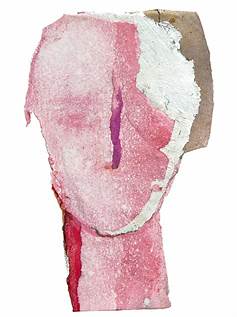

 The Sound Hole