I am wondering about what exactly we mean with regard to human worth. My chosen faith has a traditional principle that says we affirm “the inherent worth and dignity of every person”. I think we’ve revised that to say “every being”, but no matter – we are in the process of revising those values statements again, and that may result in the Great Schism of Unitarian Universalism 2024. We’ll see, but I digress.
Worth and value are frequently interposed, and often used as synonyms. I’m not sure they truly mean the same thing, however. Worth seems to be slightly harder to objectify than value, at least in a capitalist economy. Value seems to be a bit easier to define in practical terms, since we rely on systems of monetary valuation most commonly in retail terms When the police arrest a shoplifter, the monetary value or cost of the purloined items is used to assign the crime to a specific legal category. Theft of items assigned value less than a certain monetary value constitute a misdemeanor, while theft of items assigned greater value meet the definition of felony. Simple, but not always easy.
Ultimately, I believe we assign worth and value to what is useful. Things we can use to enhance, elevate, enrich ourselves are worth something to us, and we value them. When it comes to pleasure and status, we value them greatly. We value our ability to make choices highly, and we value the freedom to make those choices even higher. We often equate freedom with doing whatever we choose to do, with no encumbrance on our desires. I’m not entirely sure that’s a valid definition of freedom because there are simply too many of us sharing space on this planet to have a life with no limits. That’s not how the universe works.
When it comes to less tangible issues, however, such as life, liberty, the pursuit of happiness, and non-material items the stakes get muddy. The value and worth assigned for those items is almost entirely subjective; there is no material standard. We are entirely debating those measurements in the realm of morality, and that is an exceptionally contentious arena. The data points on that scale prove to be a never-ending continuum of “what if this” and “what about that” and “but, this doesn’t fit on the scale”. Philosophers have been wrangling with such questions since the beginning of time, or at least the beginning of recorded history, and there may be no definitive answer.
So. The continuum drives us insane, literally and figuratively. We become frustrated with exceptions to the rules we have defined, and then become frustrated with the inadequacy of the rules. The frustration drives us closer and closer to authoritarianism – do as I say, because I have a higher value than you. And we are back at the same point again: how do you value a human? Do you assign a valuation based on tangible expenditure, based on how much effort is required to maintain a life? Does a sick person incur more effort within the economy than a healthier person, and thus equates to less value in the collective? Lately, it seems that is exactly how we’re looking at things like health care. If we have to spend more money on Person A than on Person B, then Person B would be an asset according to a one-size-fits-all actuarial table and Person A becomes a liability. It’s all about the Benjamins, baby.
Can we escape this downward spiral of moral ineptitude that capitalism has become? The Benjamins are, in reality, pieces of paper. We have assigned the value and the worth to scraps of paper, and in many cases we fight and kill for those. I don’t know if it’s possible to undo that house of cards, because it is now the repository of all our faith, our hopes, our dreams, our identity. We don’t have anything better to establish value, or worth. At one time we believed merit could be the measure of both, but not so much today. Lately even merit has been tied to economic valuation. The Benjamins speak loudly if you bring in money for investors, share holders, owners.
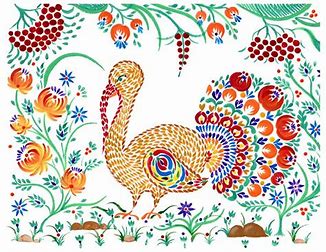
Perhaps Ben Franklin, the original Benjamin, was on to something when he lobbied for the turkey to become our national bird. Obviously his proposal was shot down, but when I think about having the turkey as a national bird, I wonder if that would have been more in keeping with the identity we claimed. The turkey is not the brightest bird, but it’s a hearty bird, and not a mean bird. It’s not a predator. It is nutritionally quite useful, and doesn’t really take a lot of resources to survive. Eagles? Not so much. They are beautiful and powerful apex predators, and have exceptional vision, but aren’t terribly useful to us. So, we chose the predator for a national bird. That may say more about us than anything.